Take your startup to a higher position with a useful Startup marketing strategies
An efficient startup marketing strategies is the foundation of any successful startup. This will dictate how, where, and when you engage with prospective clients in an effort to sell them your brand. Customers should be encouraged to do business with you by the good message it conveys. This can be achieved by considering the purpose of your company.
What role is it supposed to play? Utilize the response to that query to inform your startup marketing strategies. You should develop a plan that helps your company’s clients relate to it. This entails speaking to them in a way that they will understand by using just the appropriate words.
Furthermore, you’ll need to interact online with customers. Putting up an easily navigable website is the easiest approach to encourage them to notice your business. Search engine optimization, or SEO, can help you accomplish this.
For instance, conducting study on the most effective keywords to utilize for your company and goods. Think about things like the services your company offers, the keywords that your rivals have found success with, and any local terms that the community will be interested in. Remember that every effective marketing plan contributes to providing answers to the most common queries from your target audience.
Running a startup marketing strategies if you want to expand and differentiate yourself from the competition. We’ll talk about startup marketing strategies in this guide, covering everything from strategy development and audience engagement to tweaks and success tracking.
A startup marketing strategy, put simply, describes your approach to reaching your company’s objectives.
You must choose which marketing campaigns and concepts will benefit your company the most in order to do this.
Having learned what a marketing strategy is, you might be asking why developing one is so crucial. There are advantages to doing this in the short and long terms. Having a plan will help you concentrate on the most effective approaches to reach the objectives you have established for your company, which is one of the instant advantages. You can assure that everyone involved in your company’s marketing plan is on the same page by outlining its aims and objectives in clear terms.
Nothing is more difficult than attempting to manage an aimless business. However, you will be well on your way to success once you have determined your goals and calculated the return on investment for each one.
Every action you take as part of your business plan should increase the company’s worth in the sector you have selected. This is particularly true for a strategy involving digital marketing.
One of the numerous goals you should have is to build your social media brand. It is advisable to select the platform you believe would enable you to reach the most amount of customers. For instance, you may decide to concentrate on increasing your Twitter following. The secret is to begin with your current clientele and work your way outward in an attempt to draw in new ones.
Here’s where your marketing department can help. Having a written or startup marketing strategy provides them all the resources they need to assist you in building your brand. It’s also a fantastic method to introduce new hires to the tactics your company employs. They must have access to your marketing plan in order to integrate their own ideas, regardless of the department in which they are employed.
You might understand how to launch a company. But even after you first open for business, the hard work never stops. These 15 startup marketing strategies will help with startup marketing, from branding to creating a web presence to attracting clients.
Before you can accomplish your marketing and business goals, just as you wouldn’t take a road trip without knowing where you were going, you must first define them.
You need a clear strategy with measurable goals if you want to successfully convert leads and connect with your target audience. Your startup marketing plan needs to include your long- and short-term goals as well as your strategy for achieving them.
For instance, you might want to look into ways to drive traffic to your website and use social media marketing to gain 1,000 new followers per month in the near future (the next six months). Two to five years from now, your longer-term objectives can include growing your company, adding new locations, boosting revenue, and expanding.
Some of your longer-term (two to five years) goals include expanding, hiring more people, increasing sales, and opening a new location for your business. Key metrics can be used to determine the success or failure of your startup marketing strategies when you have end goals.
No matter how good your product, service, or marketing strategy is, customers are still essential to the success of your company. However, who are these clients?
In order to build your marketing approach to your target audience’s demands, you must first determine who they are. Here are three suggestions to assist you in identifying your perfect client:
Your target market must be satisfied with your product or service, and your marketing materials must persuade them of the importance of what you have to offer.
A key component of any digital marketing plan is keyword research. Both the keywords your target audience will use to search online and the keywords that best describe your business must be determined. The startup marketing strategy must include keywords, which you will utilize for your website, blogs, social media accounts, and ads.
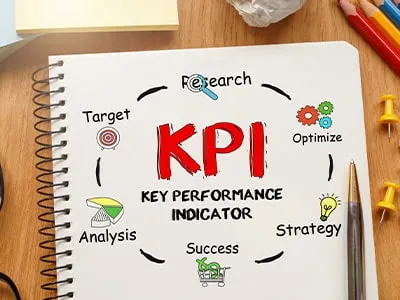
To assess the effectiveness of your marketing effort, you must identify your key performance indicators (KPIs) and core metrics. Early baseline measurement will give you a means of tracking subsequent increases or decreases.
Make sure your KPIs and metrics are quantifiable and precise. For instance, set a monthly goal of gaining 1,000 new followers on social media rather than stating that your goal is to increase your following. Alternatively, state that you aim for an average email click-through rate of 4% rather than pledging to create an email marketing list.
Your company will have specific measures that are used to measure success. But you have to set these benchmarks early on and keep evaluating your performance. Think about reassessing which KPIs and indicators make the most sense as your company expands and achieves greater success.
The first step in creating a marketing plan is figuring out how much money you can actually put into it. Your budget is probably tight if you’re just starting off, so you’ll need to make the most of it. A company budget template can assist new small business owners in getting started.
After you’ve calculated your marketing budget, you need to allocate it according to the most effective marketing plans for your company.
For instance, you should think about dedicating a sizeable portion of your budget to your social media marketing if your target demographic is younger and uses social media exclusively to communicate with your product. If you find that employing professional writers is taking up more of your resources, your blog can be your most effective
marketing tool.
It’s important to raise brand exposure online. The scope of your online presence depends depend on your industry and target audience, but a website and blog are probably great starting points for building your startup’s reputation. You can utilize one of the top website builders and design services, or you can construct and manage your website yourself, depending on your budget and ability level.
However, creating the website and blog is not enough—you or a team member needs to maintain them and provide new information on a regular basis. For instance, your blog ought to publish insightful stuff on a regular basis.
A lot of new businesses understand the value of low-cost social media advertising. But few realize how crucial it is to use the appropriate channels. Different audiences and personalities use different social media platforms, and they interact with them in different ways. Which platforms are most effective for your startup must be determined.
Facebook is a dominant social media platform. Diverse audience types exist, but in order to engage with them, you need to identify your target market and employ the right Facebook marketing techniques.
Instagram : Instagram is a great tool for advertising and marketing. Because its algorithm is designed to reward good material, you should always include helpful, high-caliber Instagram posts in your approach.
X (previously known as Twitter): When utilizing this social media platform as a marketingmedium, consistency is also crucial.
Providing your readers with pertinent content is the ultimate goal.
Examine and experiment with different social media network. For instance, home service providers can get referrals from Nextdoor, business-to-business (B2B) firms can profit from a LinkedIn company profile, and eCommerce goods sales can be increased via Pinterest.
Always use social media platform with consideration to steer clear of embarrassing brand errors that could damage your company’s reputation and clientele.
Influencers might be just as important as clients. Getting influencers to promote your goods can increase sales,
provide social proof, and strengthen brand confidence.
Consider influencers’ audiences and characteristics while assessing them. Make sure that your target clientele is among their audience. Get in touch with them to inquire about possible cross-promotional opportunities including complimentary goods and services. Establishing a genuine and natural relationship with an influencer can help your startup become more reputable and increase brand recognition.

Building an emotional connection with consumers increases brand intimacy. So how can a company use emotional content to connect with its target audience? Think about the feelings listed below and how they may affect your interactions with customers:
One of the most effective marketing techniques for creating brand advocacy is word-of-mouth advertising. People rely on credibility and trust when making purchases, so you may utilize their networks to your advantage to gain recommendations.
Budgeting is crucial because your company’s marketing strategy may be costly. The overall cost and a budget for any planned marketing efforts can both be included in your plan.
You will be less likely to overspend as you will be aware of how much you need to spend on various marketing strategies.
ROI can be determined after budgeting and campaign execution. To determine whether your marketing efforts were worthwhile, you can compare the profit your campaign created with the amount you spent using your return on investment. This kind of information is helpful to help you make the required adjustments in your marketing plan, even if you discover that one of your initiatives was financially unsuccessful or had a poor return on investment.
Consider email marketing into your plan. Email provides a means of sending bulk messages to a large number of recipients. However, you must exercise caution to avoid coming across as unduly commercial in your email, as this could cause recipients to delete it. To entice people to open the email, make sure the subject line is attention-grabbing.
Measuring your ROI on digital marketing every time is the only method to determine whether you’re on the right track or not. How does your target market engage with your brand on the internet? Do you have low bounce rates and high conversion rates? Are the interactions on your Instagram posts higher than those on Facebook? Evaluate the effectiveness of your plan in order to pinpoint areas that need work.
Personal skills and competencies are critical to the success of any firm. On the other hand, staff collaboration and teamwork can propel your company forward. The correct team is essential for creating a successful digital marketing Take into account the following while deciding whether to hire marketing agency or full-time staff:


Everything is going fine, as you have set up a physical manufacturing location head office, hired qualified people and purchased all the tools required to operate a startup. At last, now it is time to promote your offering, and for that, you need an effective startup marketing strategy that works right away or has no chance of failure.
Like all others, you want to expand your traditional or digital client base. For digital needs, you wish for more users, signups and subscribers via the website, app and social media accounts, while for traditional, you need to do newspaper and magazine advertisements, radio spots, and television commercials.
These are all marketing channels you need to use to get them. As a startup, how you can do that is a thing that puzzles you now, ‘But don’t worry about this; we are here to deliver your growth hack. This blog will discuss the 10 effective startup marketing strategies that work.
As a startup, before you build a solid startup marketing strategy, you need to take yourself back for a moment and spot what motivates you to start a business. The core purpose is clearly to generate traffic, sales and leads, but learning who your target audience is, your business market position, your core metrics /KPIs, and your budget is a thing to do; otherwise, you lose and dead. Let’s each discuss this in detail.
Are you clear who is your target audience? If so, move on. If not, make it clear and finalize it. First, remember that the knowledge regarding your aim audience is the hypotheses that will be proven or rejected based on the data you get in the next step. This refers to your understanding or assumptions about the people you’re trying to reach, including demographics, preferences, behaviors, and needs based on their culture and nationalities. For instance, you might hypothesize that a particular demographic is most interested in a specific product as it solves their problem or is in need of it.
At last, you’ll collect data to validate your hypotheses through research, surveys, social media analytics, and website tracking. So, make sure to build a solid buyer persona.
Market positioning is how you represent your product or services that can influence clients in comparison to the rivals. A strong market positioning strategy defines the 4 Ps: product, price, place, and promotion. This means you need to identify and give your product or services a unique quality that your competitors don’t give, or you can say a unique value proposition (UVP) or unique selling point (USP).
A well-defined market positioning strategy helps your brand to develop in a crowd by communicating the benefits of your offering so that your target audience understands why your product is the best fit for their needs.
Metrics and KPI are separate things; KPI is a quantifiable performance measure that proves how active you are in attaining your specific milestones, objectives, goals and missions within a timeframe, while metrics track the business’s process status. KPIs provide targets for your teams to aim for. When you have a milestone, objective, goal and mission to achieve it, KPIs gauge its progress. And at the end, give insights to help your team make better decisions. KPIs act as a roadmap. It guides teams toward success with clear and measurable outcomes that everyone can focus on. As you arch the key performance indicators, you reveal the current pace of progress with highlight areas that need attention or adjustment.
You need to determine the cost that you will invest in startup marketing on the basis of revenue forecasts and financial analyses. There is no exact range; it all relies on your business stage, the industry you belong to, and your growth goals. A standard way is to allocate some of your revenue to marketing. As a startup, you need to give a high percentage to marketing as you are in the initial stage, which is why brand awareness is more important for you. Thus, startups allocate anywhere from 10% to 20% of their projected revenue to marketing. This depends on their growth objectives and competition. As your business matures and gains a more stable customer base, you can reduce this percentage.

After winding up your analyses and research, the implementation part of your startup marketing strategy comes. We recommend going for a cost-effective approach called digital marketing as it allows for exclusive targeting of an interested audience with high ROI.
Everyone is on Google or Bing to search for something via mobile, desktop, or tablet, making a great opportunity to allure them with an intuitive and mobile-first website. As with no website, people may question your legitimacy as a business.
As per the Local Research Association, around 63% of clients visit online search for a local business. Suppose they see your business online and won’t get your website. Do you think they buy from you? No, they won’t. And even worst, they even suspect you are a legitimate business or not. In turn, your sales will severely suffer.
So, make sure to build a full-functional and user-friendly website. Also, we suggest going for a mobile-first approach. Mostly, make mistakes by starting working on the desktop version and then moving to mobile. This won’t enable a website to adapt to different screen sizes and devices lacking UX and UI.
Social media marketing is used by multiple digital platforms such as Facebook, “X,” or Twitter and Instagram to engage with clients and promote your products/services. So, the first step in generating a strong startup marketing ideas via social media is to establish your goals, whether you want to increase brand engagement, increase leads, grow brand audience, give the best client care, or drive high traffic. And then establish a KPI that helps you track the progress of your social media campaigns. Now, identify which platform your audience is most active on to confirm you spend your time on the right network, as different platforms attract different audiences.
And then build user-generated content according to your audience preferences and needs while reflecting your brand values and story. Don’t forget to collaborate with your industry influencers. Finally, keep working on evaluating and refining your social media marketing strategy.
Note that people only and only value your opinion when they assure you have authority and credibility over it. So the concern is how you can build ones. There are certain proven ways you can build credibility. We will discuss them each shortly. The first is building relationships with well-established brands within your industry, as people have solid trust in them. Partnering with them can be a great move to build credibility. The second you can do is to establish thought leadership by sharing industry insights, and expertise via informative and educational content. The third you can do is prioritize customer service, as 76% of clients see customer service as a check of a brand’s credibility.
Content that gives value to the reader is often praised as it helps the clients get what they want. But if your content marketing lacks a strategy, you are falling. You need to make sure of the search intent keywords and the trendy topic that clients are in a desperate search for.
Apart from blogging, there are content types like eBooks, white papers, webinars, newsletters and video content that can help you refine your startup marketing strategy. Also, in the case of B2B clients, their content preferences are diverse depending on their buying stage. Beginners want informational content such as podcasts and infographics, while later-stage ones prefer actual evidence from case studies and analyst reports.
Additionally, engaging in interactive content like quizzes, assessments, and surveys can further capture audience interest. You will get valuable insights. Social media posts and user-generated content can also do brand visibility and community engagement.
eBooks are more detailed, around 3,000 to 5,000 words in length and are downloadable as PDFs. Marketing eBooks act as learning aids that are visually engaging, with imagery to soften the content and describe complicated ideas. Ultimately, to promote industry knowledge and an in-depth level of expertise.
Webinars are the best way to educate clients about your product/services or share useful advice with your aim audience to generate engagement. Webinars are a low-cost type of content. And more, they give your sales team a high sale leads from your signup form. Everyone wins that is when people truly attend.
Your newsletter allows you to share your industry knowledge with clients who can benefit from it. Newsletters are also cost-effective types of content. You cannot find any content marketing tool low-priced than an e-newsletter. Your only expenses are the content and distribution.

Video content is a helpful tool to help possible consumers learn about a product or a service in 2D or 3D dimensions. 94% of marketers prefer video content marketing as it improves user understanding of a product or service, while 83% of marketers claim that video is more important than ever.
Reputation management is a planned effort to teach and influence public thoughts and viewpoints regarding your business. It claims what people say about your business online. Building a solid brand reputation is one of the great startup marketing tactics that can increase trust and loyalty among the public, attract and retain more clients, chances are higher sales and revenue, attract top talents, and even give a competitive edge.You can gain a brand reputation by tracking and addressing online reviews, responding to feedback, and showing how you solve past client issues through case studies and testimonials.
You can also monitor a rival’s reputation to get insights and avoid pitfalls. Stay active on social media also helps you in reputation management.
When you add limited-time offers into your startup marketing strategy, you can boost engagement. By strategically using targeted campaigns and promotional discounts, you can attract new clients and retain current ones. Clever use of limited-time offers in your target marketing campaigns can push traffic and can uplift your brand’s existence in a stuff market.
PR is an action of using social media channels for the promotion of the offerings and to develop positive public awareness. Public Relations is also the procedure of maintaining the brand’s status, especially during crises. It also defines how you interact with clients, politicians, the general public, industry experts and journalists.
The findings from the Pew Research Center claim that only 27% of adults in the US feel the information is reliable on social media, but 75% trust local news outlets and 56% trust information found in national news media. So, attract new clients through public relations can be a great startup marketing ideas.
A marketing partner is aligned with other brands to improve its sales. When you develop a startup marketing plan, this partner is with you. It requires a long term based formal setup. Simply put, it creates something special for clients, improves perception, increases reach & audience, costs savings, and boosts awareness.
Participating in events and conferences can give you valuable exposure to potential investors and industry leaders. Attending or speaking at conferences can position startups as thought leaders and innovators for credibility buildup. As well, you can gather feedback, stay updated on market trends, and learn from competitors and industry experts.
Startup marketing is a marketing strategy or a roadmap for startups that outlines how a startup plans and achieve its short and long term goals.
You need to determine the startup marketing cost on the basis of revenue forecasts and financial analyses. There is no exact range; it all relies on your business stage, the industry you belong to, and your growth goals.
Digital marketing give startups a cost-effective option to target their ideal clients by making a large amount of data easily available to them to understand their target audience actions, behavior’s and preferences easily. Also, it provides tools and platform such as Google Ads and Facebook ads to reach them virtually and much more.
A startup marketing strategy aims to position a startup company in its chosen industry. While already established businesses go for the generic marketing strategies, to stand out from the competition.

You must concentrate on what works in marketing if you want to achieve the greatest outcomes and you already understand how vital it is to prioritize the most high-impact and cost-effective methods of achieving your goals, even though there are many different ways to do so.

The most effective plans combine the things we’ve discussed previously and then evaluate each one’s performance to decide which ones need more or less capital. Always keep in mind that your startup marketing strategies are only as effective as your targeting and goals.
Good luck!