
Ongoing workplace learning holds the potential to broaden employee skill sets, enhance skill and knowledge retention, foster the generation of fresh ideas and perspectives, elevate morale, and ultimately enhance overall employee performance.

Empower Your Team, Streamline Projects, Increase Productivity, and Drive Success with Asana
A workplace where curiosity thrives, skills evolve, and innovation reigns supreme requires the secret sauce to cultivate a continuous learning culture where learning is encouraged and celebrated.
From the art of skill development to the power of knowledge-sharing, this blog will equip you with the ten best tips to build a continuous learning culture in your company to transform your team into a dynamic, unstoppable force.
For perpetual growth, a culture of continuous learning refers to a work environment where employees receive wholehearted encouragement and support to nurture and expand their skills, knowledge, and abilities.
Continuous learning culture is not just a buzzword but a cornerstone of strategic organizational planning. Why? Because it holds the power to propel your organization toward its objectives, retain top-tier talent, and gracefully adapt to the winds of change.
From bolstering staff retention rates to fortifying the bottom line, instilling a culture of learning and development leaves an indelible mark on companies in myriad ways. Let’s delve into the paramount advantages of embracing such a culture:

A genuine learning culture empowers employees to continually acquire new knowledge and skills, fostering an engaged and deeply committed workforce.
Learning opportunities serve as a wellspring of fulfillment, imbuing staff with a greater sense of purpose in their roles, consequently elevating both job satisfaction and employee retention rates.


Arming your workforce with the necessary skills to excel in their positions inevitably translates into heightened productivity and increased revenues.
Continuous learning equips your team with the agile tools required to navigate swiftly changing market conditions and evolving customer demands, ultimately ensuring your company’s enduring competitiveness.


Companies that prioritize development opportunities are highly regarded by employees, making them magnets for top talent and bolstering their ability to attract and retain the cream of the crop.
Now, the million-dollar question: How do you breathe life into this culture within your workplace? Let us serve you some invaluable tips to set the wheels in motion.
Here are ten actionable tips and tricks on building a strong learning culture that drives success and growth in your organization.
You can also add tags to your projects and use colors for a better overview, especially when working on different projects simultaneously. This makes it easy to sort and organize the tasks.
Employee onboarding is the prime opportunity to immerse new recruits in the organization’s learning culture swiftly. You must familiarize your employees with organizational values, attitudes, and behaviors.

Furthermore, it is also about providing a comprehensive introduction to the company’s learning environment, available opportunities, and the expectations surrounding it. The faster they acclimate to this culture, the sooner they can begin harvesting its benefits and making meaningful contributions.
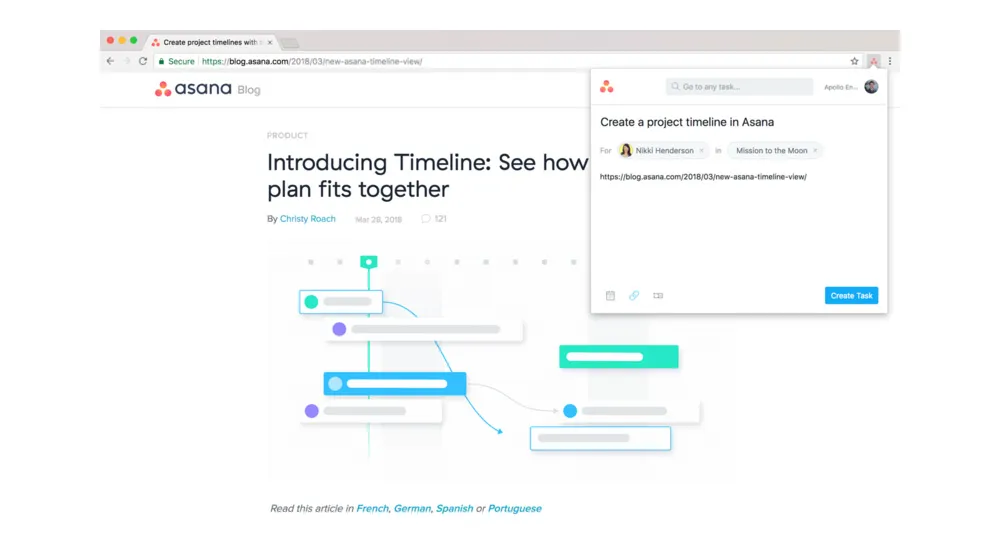
Use the Chrome extension for Asana to store web pages directly as tasks. You can immediately add a task from a web page you browse to Asana as a new task. Moreover, you can do this without copying and pasting any links or other information.

Cultivating a growth mindset within the workplace is a journey that doesn’t unfold overnight. However, by applying gradual and unwavering efforts, substantial can be achieved. Let’s explore a selection of strategies aimed at fostering a growth mindset.
Nurturing a growth mindset starts with creating an atmosphere that embraces open communication and welcomes feedback with open arms.
For instance, consider Google’s weekly “TGIF” (Thank God It’s Friday) meetings, where employees are encouraged to pose questions to top executives openly.
This inclusive approach underscores the importance of every individual’s perspective, instilling the belief that everyone’s ideas hold value. This practice cultivates a culture of perpetual learning and ongoing improvement.
Within a growth mindset organization, the spotlight shines not only on the outcome but also on the dedication and effort invested along the way. A prime example is Pixar Animation Studios, where they hold “post-mortems” following each project.
These sessions are not about assigning blame or finger-pointing; instead, they center on extracting valuable insights and lessons learned throughout the project’s journey, regardless of its outcome.
By strongly emphasizing the learning process, organizations inspire their employees to wholeheartedly embrace challenges and glean wisdom from setbacks, embodying the core tenets of a growth mindset.
Mentoring and coaching initiatives play a crucial role in nurturing a growth-oriented mindset. You should pair mentors with newly onboarded employees to cultivate a culture of ongoing learning right from the start.
Additionally, coaching programs offer individualized feedback to your staff members, supporting their continuous growth and development.
Any culture within organizations comes from the top down. If your senior management practices the learning culture, it penetrates the bottom hierarchy, and the employees follow.

A notable illustration of this concept is Jeff Bezos’s “Day 1” philosophy at Amazon, wherein he inspires his team to approach each day with the same curiosity and zeal as a startup’s initial day.
Get your higher management to actively participate in coaching and mentoring or create course content to train employees. This will advocate the culture of continuous learning amongst your team members.

89% of learning and development professionals believe that proactively enhancing skills will enable their organizations to navigate the challenges of future work successfully. Therefore, you must invest in comprehensive L&D programs to signify your organization’s commitment to creating a continuous learning culture.
Furthermore, it is essential to understand that learning and development programs should not be confined solely to job-specific skills. You can foster the development of a broader range of competencies by expanding the scope of learning opportunities.
Transform your regular team meetings or daily scrums into learning opportunities. You can incorporate “learning moments” into your sessions, allowing team members to share recent discoveries or insights.
Everyday learning practices can also take on an informal format. Engaging in a conversation about a particular process or an intriguing article with your team can present a routine opportunity for learning.

Highly effective learning cultures prioritize open communication, fostering an environment where your staff can discuss and freely exchange their newfound knowledge.

There are a couple of effective strategies to encourage your employees to share valuable resources. You can create a dedicated forum or LMS where team members can readily share valuable information they have come across.
Salesforce’s “Lunch and Learn” sessions are a good example, where its employees come together to exchange knowledge and learn from one another.

In the era of advancing technology, a plethora of platforms and tools are available to support continuous learning. Learning Management Systems (LMS) stand out by offering personalized learning paths, enabling employees to acquire knowledge at their preferred pace.
Platforms like eLeaP can comprehensively monitor employees’ learning activities, assisting organizations in identifying and promoting a culture of continuous learning.
Recognition holds significant importance as employees seek acknowledgment for the time and effort they invest in their learning endeavors. The best way to achieve this is by implementing company-wide initiatives that reward your team members for their dedication and hard work.

These initiatives can be a small gesture, such as sending out a commendatory email or giving recognition on Slack for outstanding performance. For more substantial and motivating rewards, you can present a prize to the employee who completes the most courses over a six-month period.
This will enhance the adoption of the L&D opportunities you offer and convey to your employees that you genuinely appreciate their commitment to learning.

This ongoing evaluation process empowers you to refine and adjust your L&D program. You can customize it to better align with your employees’ requirements and, most importantly, enhance their effectiveness.
A culture that fosters ongoing learning can thrive when employees are confident in taking risks and learning from their mistakes.

Google’s Project Aristotle champions psychological safety as it revolves around creating an atmosphere where employees can freely voice their thoughts without apprehension of criticism or reprisal.
By cultivating psychological safety, you can empower your employees to venture beyond their comfort zones and enthusiastically embrace learning opportunities.
Now that you know how to build a continuous learning culture within your organization, the last crucial aspect is to remember the following three golden rules of creating a continuous learning culture.

Recognize that building a learning culture is not a solitary endeavor. No single individual, not even the CEO, can shoulder the responsibility of creating a learning culture alone.
Instead, a learning culture becomes ingrained within the very fabric of your organization, extending its influence to encompass and engage every individual at every level.
The core objective of learning is always geared towards facilitating your employees in reaching their maximum potential and enhancing business outcomes.

You can only accomplish this when learning becomes an integral part of your organization’s DNA. Reject the notion that a learning culture can be condensed into a few sessions completed over the span of a few weeks.

The development of a continuous learning culture is more akin to a visionary pursuit rather than a standardized project.
Establishing a learning culture necessitates the commitment and active involvement of multiple stakeholders. Convene to deliberate on the vision, values, and critical enablers required to build the desired culture.
Move beyond the ‘how’ and ensure that you can effectively address the ‘why’ – why do we aspire to cultivate a learning culture, and why should our people be invested in it?




The workplace culture at your startup refers to the underlying psychology of your company, what it represents, and the relationships shared amongst its members. Therefore, startup culture boils down to its values and collaboration amongst employees, operations, and everything in between.
In addition to the shared values, the startup culture is about the people who make your company. This includes founders, leadership, and employees and how they interact, collaborate and communicate with each other.
Building your startup culture comes with a wide array of benefits, including greater productivity, fewer errors, higher workforce motivation, easier recruiting, and longer employee retention. However, building a creative and innovative culture at your startup gives you additional advantages in a competitive and dynamic market.
This article will share some tips and best practices to help create a culture of innovation and creativity for your startup in 2023.

If you are a startup owner, here are some tips on creating a strong creative, innovative culture for your startup in 2023 and beyond.
Remember, the startup culture of innovation and creativity starts from the top of your company’s hierarchy.
Therefore, as a startup founder, you must encourage fresh ideas to endorse creativity. If it is an innovative culture you are after, you must seek new input from your employees and partners and should not be scared to make mistakes.


The primary goal of a website is to bring traffic, and it only happens when the page is visible to search engines. If search cannot find a page, it cannot index it on SERP. Sitemaps help search engine crawlers to find a web page and read it for indexing.
In short, sitemaps work like road maps for crawlers to understand which pages they should index first and display them as results.
How to Hire Like-minded Founders for Startups?
Finding like-minded founders for your startup involves a deliberate and strategic approach to ensure compatibility and alignment of goals. One effective way to attract like-minded individuals is by clearly articulating your startup’s mission, vision, and values.
Through your online presence, social media, and networking events, communicate your startup’s purpose and objectives, naturally attracting individuals who resonate with your aspirations. Other ways to find like-minded founders for your startup include:
Like-minded leadership in startups offers numerous benefits that significantly contribute to the company’s growth and success.
When the founders and leaders of a startup share similar values, goals, and visions, they are more likely to align their efforts, make faster decisions, and foster a cohesive work environment.
This shared vision and mission help them focus on the core objectives and create a consistent company culture.
The streamlined decision-making process among like-minded leaders allows for efficient resource allocation and swift execution, which is essential in the early stages of a startup.
Additionally, their clear communication and strong team collaboration set a positive example for the rest of the organization, encouraging open dialogue and trust among team members.
Like-minded leaders also demonstrate resilience and perseverance during challenging times, supporting each other and maintaining team morale.
Moreover, their unity projects a strong external branding and reputation, attracting investors, customers, and partners.
While valuing like-mindedness, startups should also embrace the diversity of thought and experience to drive innovation through fresh perspectives and creative thinking.
Striking a balance between shared values and diverse viewpoints is key to ensuring long-term success for startups.
First-principle thinking is a problem-solving approach that involves breaking down a complex problem into its fundamental components and then reconstructing a solution based on a deep understanding of those components.
This approach is often used in various fields, including science, engineering, and business. In the context of startups, first-principle thinking can be a valuable approach to developing innovative and unique solutions to challenges and driving the growth of the business.

Remember that diversity in teams truly brings innovation, and this diversity has to be seen in multiple areas, including age, gender, specialization, and so on. For example, it’s good to bring on programmers and developers who have worked in different industries.

A team comprising individuals who tackle complex problems with creative thinking and are determined to persevere through challenges is invaluable
A resilient and intellectually curious group that thrives on this kind of dynamic energy will consistently outshine a team of experts who lack these attributes.
As a startup owner or founder, you must aim for diversity and inclusion by hiring employees with diverse work experience, education, and cultural backgrounds. When people from different backgrounds collaborate, the results can be powerful.
Various backgrounds, preferences, thinking styles, ages, departments, and experiences give a mix of unique perspectives that lead to much richer solutions.

Rachel is a seasoned and relationship-driven baby boomer with a wealth of industry experience and an extensive professional network.
Real estate, consulting, and luxury goods sectors.
Chandler is a pragmatic and experienced Gen Xer with a strong background in leadership and problem-solving. He has weathered economic fluctuations and understands the importance of stable growth strategies.
Manufacturing, renewable energy, and logistics sectors.
Sheldon is a highly adaptable and collaborative millennial with a diverse skill set. Having witnessed the rise of the internet and the shift towards remote work, Sheldon brings an array of skills to the table.
Fintech, SaaS, and health-tech sectors.
Natalie is a tech-savvy and entrepreneurial Gen Z member who has grown up with technology at her fingertips to help your startup stay ahead in the digital landscape.
e-Commerce, social media marketing, and app development
Strive towards creating an all-encompassing startup culture that extends respect to individuals irrespective of their origins or convictions. This constitutes a pivotal element in fostering a triumph-oriented startup company culture.
Motivate your employees to participate in extracurricular social engagements like sports groups or community service projects. Implement flexible work setups, encompassing options like remote work days, to accommodate diverse needs.

Furnish enriching resources like literature and videos spanning various subjects. Nurture the ability to listen actively by dedicating weekly sessions to discuss diverse topics.

Since learning and innovation go hand in hand, teaching employees new ways to complete their duties encourages innovation. Upskilling describes a culture that develops employee capabilities and employability by instilling the knowledge, skills, and attitude workers need to improve job performance.
Define the essential skills employees need to remain competitive, create training programs, and support employees to learn alongside their regular duties.
In addition to building goodwill among employees, upskilling fosters innovation and technological adaptation.
According to PWC’s 23rd Annual Global CEO Survey, more than half of CEOs of more advanced organizations agreed that their upskilling programs led to greater innovation and accelerating digital transformation. In the same PWC survey, only 15% of CEOs of beginning upskilling organizations said the same.
That means a successful culture of upskilling requires a long-term mindset and provides increasing returns over time. Realize the benefits of upskilling may not arrive immediately and remain patient.
Present innovation as a collective responsibility, extending beyond the confines of the research and development or innovation team. Establish and convey a comprehensive innovation strategy within your startup, engaging all employees in the process.

Ensure that performance evaluations, incentives, and rewards are closely aligned with the attainment of your innovation goals.
Promote the idea that innovation is a shared endeavor involving contributions from every corner of the startup. Envision and articulate a strategic roadmap for innovation that resonates with employees at all levels.
Communicate this strategy through transparent channels while encouraging an environment where creative thinking and novel solutions are.
Revise performance appraisal processes to integrate the assessment of employees’ innovative contributions. Incentivize the pursuit of innovation by linking rewards and recognition to the degree of alignment with the innovation strategy.
Acknowledge and celebrate those who proactively participate in fostering new ideas, problem-solving, and driving impactful change.
By instilling a culture where innovation is embraced by all and nurturing it through strategic communication, evaluation, and incentives, your startup unlocks the full potential of every individual to drive innovation forward collectively.

Facilitate the convergence of individuals from diverse business units, teams, roles, and disciplines. This enables your startup to engage in collaborative brainstorming aimed at addressing distinct customer requirements, exploiting business prospects, and tackling hurdles.
This practice dismantles isolated operational divisions, fostering heightened organizational effectiveness that organically nurtures a vibrant innovation culture.
Optimal grounds for fostering creative and innovative thoughts manifest in an ecosystem where specialized domains and roles form a rich tapestry unified by a common purpose, overarching vision, and a profound value for cooperative efforts.
Within this framework, team members consistently seek novel methodologies, ceaselessly aiming for enhanced workflows and ongoing betterment.
In your startup’s innovative and creative culture journey, you will encounter obstacles and failures preceding eventual success. Each time an innovator working for your startup introduces or assumes responsibility for a new idea, they embark on a risk-taking endeavor.

Embracing risk and acknowledging the possibility of failure are integral to the creative process. Make sure to reduce the aura of fear and jeopardy surrounding risk-taking and failure to create a work culture for innovation and creativity to flourish.
When the atmosphere surrounding creative endeavors shifts from suspicion, defensiveness, and aggression to openness and acceptance, the individual’s apprehension about failure diminishes.
Consequently, your employees become more inclined to share potentially groundbreaking ideas for the benefit of the business. In simpler terms, a culture that nurtures creative and innovative thinking by fostering an understanding that setbacks are part of the journey can lead to the realization of truly remarkable concepts.

An alternative kind of work environment for fostering innovation and keeping your employees “on purpose and on point. The best way to achieve this goal is by outsourcing areas where a startup is struggling to be innovative and creative.
Creating empowered teams that get the work done leads to absorbing the info in-house to innovate later.
Empower your team with the flexibility to experiment with existing technology, even considering complete overhauls for a forward-looking perspective.

Allocate 80% of the time for planned assignments, reserving the remaining 20% for team members to delve into their areas of interest enthusiastically. Shield your startup’s imaginative thinkers who generate exceptional product concepts from excessive demands, enabling them to channel their energies into continuous innovation.
Cultivating a content and inspired mindset is the catalyst for fostering creativity and driving groundbreaking innovations!

You must help your employees become comfortable with uncertainty and offer them mental freedom from the fear of being penalized for errors.
As a startup owner, guide your employees towards embracing uncertainty and ambiguity, priming them to tackle projects that push the boundaries into unexplored realms. Establish dedicated environments for your employees to freely delve into novel technologies and concepts, liberated from the constraints of rigid targets or deadlines.
Collaboration and transparency, timeless in their efficacy, remain steadfast cornerstones of business success.

Nurturing teamwork within your team is pivotal in shaping a thriving company culture. Cultivate an atmosphere of openness through initiatives like open-door policies, fostering an environment where employees can freely voice concerns and brainstorm ideas without apprehension.
Additionally, facilitate equal access to information by employing tools like Slack or Microsoft Teams, enabling seamless document sharing and real-time communication. This approach tried and tested across numerous startups, is a strategy.
From a psychological standpoint, navigating the startup landscape demands agility and swift decision-making. Prioritize the capacity to swiftly and effectively adjust to evolving circumstances.
In the realm of team meetings, strive for equitable participation, where every voice is heard, and ideas are accorded due consideration. This practice fosters a sense of worth and recognition among team members, thereby fortifying collaborative bonds.
Upon identifying a viable suggestion—whether it originates from you or a team member—demonstrate adaptability by embracing the concept. This inclusive approach encourages heightened engagement from your workforce, resulting in a more engaged and participatory environment.
Drawing from psychological insights, forging a constructive work culture hinges on recognizing the diligent efforts of your employees and assuming accountability for errors.
Commend achievements, irrespective of their scale—be it a triumphant product debut or commendable progress on a solitary assignment. Extending recognition for commendable work significantly influences team morale.

Simultaneously, when things go awry, demonstrating a readiness to hold individuals responsible signals your ownership of the circumstance. This gesture fosters trust among employees, bolstering their sense of security within their roles at the company.
Embrace both reward and responsibility; you construct a foundation of positive psychology that contributes to a harmonious and resilient work environment.

Allocating resources to enhance employee well-being proves pivotal in cultivating a prosperous and enduring company culture. Statistically, businesses that invest in employees’ health observe a notable rise in job satisfaction, engagement, and productivity.
Research indicates that offering comprehensive benefits packages leads to a 46% increase in employee satisfaction. Furthermore, flexible working hours contribute to a 24% rise in perceived work-life balance.
Implementing wellness programs or mental health support services correlates with a 30% reduction in absenteeism, positively impacting overall team efficiency.
Moreover, rewarding hard work and innovative thinking is statistically linked to a 53% increase in employee motivation and creativity. Demonstrating a commitment to employees’ well-being fosters a tangible sense of belonging, as evidenced by a 59% surge in employee retention rates.
Incorporating these statistics-driven strategies accentuates the value placed on employees’ holistic health, subsequently fostering a workplace culture that not only endorses success but also gratifies all stakeholders involved.
A culture of innovation is an atmosphere where people encourage to experiment new things, promote creativeness in their daily actions and get support of performing risk-taking actions. This blog for those who really want to work on their business environment and want to build a culture of innovation. If you are the one, read this blog and make a great impact on your business atmosphere.
Innovation has been popular catchphrase in the workplace. It something that most of us really wanted to do. Some have achieved it such as Google while most are working on it. As well, there is a misconception that companies by adding few new practices in the business culture being made them innovative.
And you don’t believe mostly doing this and claims having an innovative culture. Note, until and unless you don’t have a serious goal and vision, you cannot be innovative or build an innovative culture with in your workplace.
This blog will clarify everything regarding innovative culture. You will familiarize with the ten most valid ways that promise an innovative culture, it’s ultimate benefits and challenges when implementing this on the place of work.

Building a culture of innovation is simpler than we expect—wrong judgment. It is a challenging chore that require a supportive leadership style, clear vision and structured approach to nurture it. Let’s go through the ways to nurture an innovative culture for growth.
Start observing your workplace each corner from employee’s behaviors to business activities to spot those areas where innovation lacks or is needed. As an example, with the arrival of remote work, work environments continuously shifts. This effect the in-groups or those who closely in-contact with each other in a particular project.
In turn, culture of closeness and face-to-face interaction or you say “professional socialization” losing its grip. Understanding how you can remove that bridge count on your business leadership style and support to build innovative culture.
This example is for understanding purpose. There can be multiple other areas that needs a deep focus to infuse innovation in those areas. Once you focus is on the right track, a healthy organizational culture can start coming to life.
To foster an innovative workplace culture, leaders must set a good example for their staff members. An atmosphere of trust and teamwork is mandatory. A flat leadership structure (a business with few or no hierarchical levels among workers) allows safe environment for open discussions. Teams can take ownership of their projects. Any members with in the team must have a right to give ideas and the leaders must act on it without fear of consequences or criticism from above.
Although not every firm can have (or have) flat structure. In case of those who have complex hierarchical structure, each department lead must encourage open discussion and expects from each subordinates to participate and put into their ideas and suggestions.
Brainstorming motivates individuals to come up with new thoughts and ideas, fosters groupthink, and kindle creativity. Daily team building via brainstorming sessions improves openness and trust among staff, a key to creative and innovative culture.
When a team ambers share ideas with each other, in actual share their weak and strong points. This result in an innovative solution that they might otherwise can’t develop. Use each point of view as a starting point to come up with new ideas, or look at a topic from different perspectives to get the best results.
You need to build a clear and systematic process to develop an innovative culture by first assessing what is your vison as we previously discussed. No business move onwards until and unless they don’t have vision and the solid willingness to reach that. Once you set it, create channels for staff members to share their ideas, thoughts, and opinions. Then allows them to collaborate with one another via daily brainstorming, make it a part of every one’s job.
When you remove the divisions between people or groups in a company with a systematic approach, you can easily foster a culture for innovation. Here systemic process implies that first understand your vision, always appreciate people ideas and suggestion, and at last provide tools and resources that help their ideas to accomplish if they benefit the company.
Clarity with in a business builds solid culture of innovation. Apart from recognizing business top priorities, clarity raise trust. Move on, trust raise personal connections and engagement. In turn both encourage confidence to share creative ideas with each other.
And the best way to do this is by providing project management and collaboration tools which allows everyone to access the information. Rather than putting word based strategies in Word Docs hidden in private drive, go for a collaborative tool such as wiki-style or Confluence software that allows everyone to find, read and comment on. This will create an open communication culture where any one can share ideas, and concerns with no fear.
When we talk about innovation, we assume risk is there. But once a smart idea is put into action, you cannot revert it. Gauging the outcomes of that innovative idea is mandatory to make decisions based on empirical evidence rather than intuition, which encourages experimentation. By analyzing past performance, companies can learn from and be cautious when working on future projects. This way, a cycle of continuous learning and improvement takes place in creating a culture that encourages innovation.
An innovative mindset is described by the willingness to take risks, hug failures as learning opportunities, and carry on in the face of challenges. Training programs can cultivate the risk-taking mindset which helps employees to feel supported to do experiment. An honest training program assures that you have liberty to share bold ideas where failure is not punished but seen as a step towards innovation. Employee training programs focus on employees to think out of box, and question the status quo. Seminars, workshops, simulations, and innovation labs can give practical experiences that strengthen these values and foster a culture of innovation.
Feedback channels are of two types: Physical and Digital. Phone calls, physical and comment boxes are the traditional once while social media comments, emails, online surveys and other platforms such as Trust Piot are digital ones.
As an innovative culture supporter, you must use all of these to collect the feedback from clients. A positive feedback culture promotes up-skilling, innovation, and collaboration, while stopping reputational risks and communication silos. Make your work culture stronger by encouraging frequent feedback, using feedback channels, along with interactive training, and incorporating openness into your business culture.
Diverse teams are good at resolving issues as compared to team of single race or homogenous people. Deloitte research shows that business with diverse cultures are double meet or beat financial targets, eight times more give stronger business results and six times more agile and innovative, as compared to less diversity in the workplace.
Diversity is a key that unlock innovation. When individuals of different ethnicities, races, backgrounds, experiences, come together each with own new perspectives, they’re more likely to question conventions and give fresh viewpoints which helps in creating a culture of innovation and creativity. Remember in this regard both male and female viewpoints are equal.
No mistakes say no learning in turn no innovation. If you want a culture that values experimentation, creativity and risk-taking, promote mistakes as a way to growth rather than devaluation. You won’t get a certificate of learning experiences so long as you won’t make mistake and learn from it. Mistakes strengthens trust, collaboration, resilience and innovation. Embrace it!

Building a culture of innovation is simpler than we expect—wrong judgment. It is a challenging chore that require a supportive leadership style, clear vision and structured approach to nurture it. Let’s go through the ways to nurture an innovative culture for growth.
When is team if efficient, the probability to achieve the goal is high. A culture of innovation boost team efficiency. A well-founded innovative culture allows team members to get fresh standpoint about the problem and explore helpful solutions. As an example, when you motivate open discussions among diverse staff members and stakeholders, you can hear multiple voices with their fresh perception on an issue, the resolution you get is worth the winning.
A Google is a perfect example who is well-known for its innovative and creative work atmosphere. An innovative culture gives clarity, directions and guidance to the team members within the workplace allowing each of them to perform their task with satisfaction and freedom to give opinions.
As per the research from Deloitte, it is disclosed that companies with a solid culture of innovation experience an amazing 30% rise in employee engagement. This directly relates to a 20% rise in productivity.
When employees are engaged, they suggest radical ideas with m fear to be ignored or mocked. They feel valued as they enjoy having a control over the job rather than feeling bounded by restrictions. In turn their decisions are result-oriented and company’s performance boost.
Companies use those talents who have the ability to bring the business vision to life and to developed a competitive edge. You can be retaining the existing ones and attracts the new one with a strong culture of innovation, setting a competitive edge. In an innovative culture, companies support employee’s ideas and empower them to take risk keeping in mind what the outcome can be.
When a management encourages staff member’s involvement and appreciates the point of view build employee’s honesty and trust towards the management which helps to attract new talented employees and retain the current ones.
First of all, a culture of innovation attracts new ones and retina existing ones, strengthen employee engagement, and boost team efficiency, all these plays a big role in moving the company to a new level. When workers feel motivated, the engaged more and adapt to change rather than resist change.
Second, an innovative culture motivates business internal/external communications to stay updated about industry trends and straight away adapt to the changing needs of the humans. This lets businesses to remain active in their industries and spot new opportunities. Both of these is a leading factor in pushing the business growth.
An innovative culture breaks the status quo by consistently giving opportunities to new employees to share new ideas with the intention that any of those ideas can have the power to boost the company strength. This means the company is serious to move onwards and making huge efforts to take the lead within their industry or wanna be an innovator.
As well, the employees will get all possible resources that are readily available; creating spaces, from laboratories to workspaces, to explore new opportunities to give real results. The purpose of this is to identify opportunities that how a company can boost it position with a new product or service or with a new business system that helps refine the entire company structure.
An innovative culture promotes creative problem-solving and diverse viewpoints of all staff members. When you encourage the teams to think outside the box, they explore intact market opportunities and come up with solutions that deliver actual results. This approach helps businesses refit to changing market demands.
As well, an environment that values research, testing and risk-taking can lead to discovering new consumer needs and preferences. By honoring an experimental mindset, companies can move in line with the changing trends and better deal with market shifts and adjust themselves on those shifts.
Fist if all, for clarity, we should know about the phrase “company adaptability”. The phrases describe that a company is keen to adopt to changing human behaviors and market changes. The change can be any due to economical disruptions, new innovation invention that impact the other business operations, or a human behavior towards your product or service due to these occurrences.
When you have an innovative culture, you are promoting diversity, encourage open communication and employee participation and their appreciation. When all these efforts are putting into action, it will automatically verify that you’re ready to adapt to the evolving market and consumer changes. Ultimately, you will build a positive impression in the eyes of yourself and your employees and your clients and overall all among the population.
An innovative culture is a work atmosphere that nurtures and rewards employee creativeness rather than emphasizing on deadlines and revenue. So, it can never set back working on absolute practices that has no outcome.
A culture of innovation always prioritizes modern business practices and align their plans according to those practices. They use more predictive analytics, enable greater internal networking, are more customer value focused, goes in a repeating loop rather than moving in a straight, one-way path, and empower agility and speed.
Where there is a benefits, there is as well as challenges. Most companies face challenges when implementing an innovation in company culture or modify it into their workplace. We will discuss those challenges here in detail:

When change takes place in the workplace, some employees try to resist it. These are those especially the aged ones. They have a fear of either losing control or reluctance to try new things. Dealing with it is a concern that management need to tackles it as soon as possible or be prepared for it with solid backups. A clear communication in the form of motivational session and training programs can help reduce the chances of resistance.
Motivational session helps the employees to give clarity what is the purpose of this change and how even they can get benefit from it while training programs reduce fear and improve confidence among the employees that how this new process will benefit both the system and the staff.

A major barrier to innovation can be a fear of failure. Employees feels paused to take risk assuming they get blamed for it. A safe environment can be a great thing to do to stop barrier. When employee’s build-up guts to take the risk or try new risk things without fear of penalized, they support your innovative culture.
Note, giving employees psychological safety is a component that help you deal with panics of disappointment. When you motivate that failure is a part of innovation that should be celebrated rather than punished., you will build a real innovative culture.

You cannot move forward or innovate if you don’t have enough resource either it can be an investment, technology, or a time. Lacking these can stop your innovation. You should allocate resources accordingly if your mission is to develop a culture of innovation.
This implies that either you will reserve certain amount of your sales to invest or arrange funds from other sources like financial institution or banks for innovative cultural development purpose. Another cost-effective solution is to partnership and collaborate with industry associations or vendors, to share resources and cut costs.

This means that group of people or department are to indulge in their own commitments that a communication and collaboration gap occurs with each department or teams. On way to tackle this issues is to nurture a culture of clarity says that you can share information regarding your company goal, mission and vision and core values and strategies across departments and teams. Also you can develop opportunities for employees by encouraging cross-functional collaboration. Allowing multiple departments and team to mingle and perform together on initiatives and projects is a smart approach to eliminate siloed thinking to create a culture of innovation.
Encouraging continuous learning among your employees can provide the following personal benefits:
Ongoing workplace learning holds the potential to broaden employee skill sets, enhance skill and knowledge retention, foster the generation of fresh ideas and perspectives, elevate morale, and ultimately enhance overall employee performance.
The organization’s transformation can be observed by emphasizing three key dimensions: Becoming a Learning Organization, Embracing Relentless Improvement, and Nurturing an Innovation Culture.
Recognize that every organization is distinct, and there is no universal approach. Therefore, take the insights we have discussed above and customize them to align with the specific needs and attributes of your organization.
Cultivating a culture of learning throughout all levels of your organization offers tremendous benefits. It unlocks the full potential of your workforce and keeps your organization at the forefront of the market.
