

How Much Does a Static Website Cost?
Every business wants to impress and attract its target audience, and a static website can make it happen!
These days, creating a website is not as significant as it was a few years ago. Anyone can create a website, regardless of coding experience, thanks to the abundance of automated website builders and platforms available. The price of developing a website varies depending on several factors, including the development process, the platform and language, the intricacy of the design, the site’s goal, the features and functionalities, and the amount of time required.
Since there are numerous things to consider while developing a website, estimating the exact static website cost based just on its design is nearly impossible. A website’s value is enhanced by the amount of work that goes on behind the scenes. Still, a seasoned web development firm or developer may provide you with an approximate price based on a thorough examination of the specifications, goals, and functionality of your website.
If you’re attempting to determine how much your future online portal or static website costs. You may calculate the price of developing a website by using the information in this article.
Did You Know?
When using an agency or freelancer, the average cost of building a website is between $12,000 and $150,000; using a website builder, the cost is between $0 and $500 each month. On the other hand, regular site upkeep costs $400 to $60,000 annually, or $0 to $5400 if you use a website builder. To find out more about website pricing and be able to respond to the question, “How much does a website cost”?
Table of Contents

Things You Need to Create a Static Website with Cost
Website Domain
Your identity on the digital era is your website domain name. Since your domain name determines the address to access your website, it’s vital to choose the one that matches your business name. This assures multiple benefits like:
- Avoids confusion for your target audience.
- Strengthens your brand identity
- Improves your SEO
You have a large variety of options where you can buy your website domain, each having its own price.
NameCheap
You can get a top-level domain name at NameCheap for a low cost. NameCheap domains get free WHOIS privacy. The company also offers SSL certificates, VPNs, and emails.
The registration cost of a NameCheap domain is between $6-10 for the first year, followed by the renewal cost of $13 per year.
GoDaddy
Being one of the renowned domain providers, the GoDaddy domain name might be a bit more expensive than others. A ‘.com’ domain name from GoDaddy may cost you between $19 to $23. The ‘.net’, ‘.org’, and ‘.io’ domain names are available as well.
DreamHost
The domain name from DreamHost costs between $7 and $12 for the first year and $17 to $20 per year.
Domain.com
The domain names at Domain.com can cost you about $9-$13 for the first year. Renewal of your domain can cost you around $14. If you renew your domain for 5 years, you can get a discounted price of $53.
At an added cost, you can also get SSL certificates, email, and hosting as well.
BlueHost
A referral landing page becomes a potent tool when running referral incentives, promotions, sales, or discounts. It helps elevate your customer lifetime value and motivates them to extend your reach within their networks.
Web Hosting
Web Hosting is the major foundation of your website. The various types of web hosting include shared, managed, VPS, and dedicated. Out of all these options, shared hosting is the most affordable, as you share one server to host multiple websites.
The most expensive option is a dedicated service, which means having your own server. Whether you choose shared or dedicated hosting depends on your business expectations. The cost of your website hosting can be between $3 and $400 per month, depending on the one you choose.
SSL Certificate
An SSL certificate secures the information exchanged between a visitor and a website. Websites must have an updated SSL certificate to protect sensitive information such as passwords and payment information.
Often, the SSL certificate is complimentary with web hosting. If your chosen web hosting doesn’t have a free SSL certificate, you’ll have bought one, which may cost you around $7 to $250 per year.
Some of the most reliable options for buying an SSL certificate are HostGator, SSLs, and DigiCert.
Pro Tip
Once you’ve registered a domain name, hire a dedicated web developer to build your dream website.
User Interface Design
It’s recommended that you design a website mockup before starting the development process. This ensures that your website meets the requirements and presents a seamless user experience. The mockup, also called a wireframe, illustrates what your layouts, mockups, and graphics will look like.
The estimated cost of a UI design is $1500 to $2000 per website.
Cost for Static Website Maintenance
Just developing a static website doesn’t mean you’re done. Your website may require updating the SSL certificate, web hosting, domain, content, and more. You may also want to post new blogs on the website to support the SEO progress.
These after-service static websites cost you between $500 and $1500 per month. Remember, your consumer demand is changing, and you need to keep your website updated to grab their attention.
Before You Build a Website
Businesses often want a website for the sake of wanting a website. They get carried away with their hopes and don’t achieve the desired outcome they need from the website. Here are some things you need to keep in mind before you decide to have a business website.
Understand Your Audience
When you know your target consumers, your website developer can create a user interface that attracts them. For example, if you want to reach tech enthusiasts, your primary website color will be blue. Similarly, if you’re selling things to eat, you may consider choosing a red color theme.
Realistic KPIs
Businesses tend to overestimate the power of a website and expect unreachable results. It’s not like you can build your website one day and expect a million-dollar revenue the next. You should set realistic projects for your website traffic, conversions, and ROI.
Identify Your Budget
As we’ve discussed the expenses for building a website, you should know the budget for it. That’ll allow you to manage your finances and ensure you don’t overspend.
What are the Contents of a Static Website?
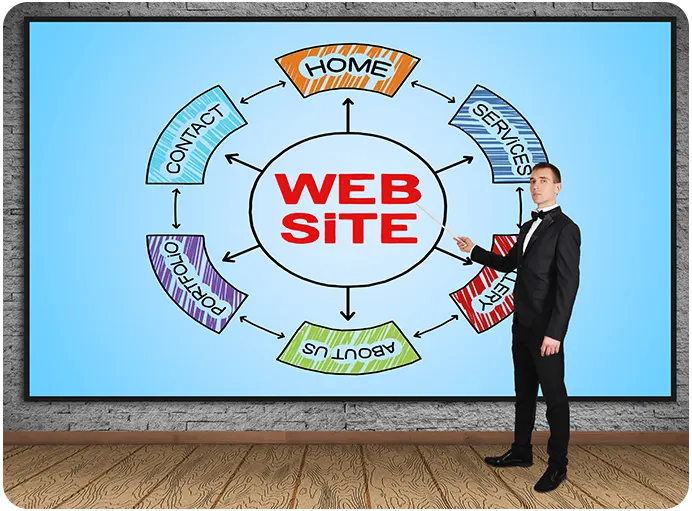
Static websites are extremely lightweight because they are primarily created with HTML and CSS code. even with a shaky internet connection, they load rapidly.
All these pages are essential to a static website.
1. Homepage: The page that appears on a website when a visitor lands there.
2. About Us: Details about you and your company should be included on this page. You can also list the facilities and services you offer.
3. Terms & Conditions: These are the rules and regulations that apply to utilizing your website.
4. Privacy: An explanation of your website’s contents and recommended user behavior.
5. Contact Details: Included in the contact details are the address, phone number, and social media accounts.
You should be aware that since static websites only generate material once, you can only execute a limited amount of SEO on them. It is not comparable to other dynamic websites available online.
How Can You Create a Static Website for Free?
Using blogger.com to construct a static website is the simplest method. This website is a Google platform that offers free website hosting. You can use online templates that are offered for free. Simply import them into Blogger after downloading.
How to use Blogger.com to Make a Free Static Website
Whether you are trying to sell something, get people to sign up for your newsletter, or just share information, a great landing page is key. It’s like the front door to your online world. In this section, we will walk you through the best practices for creating effective landing pages.
From catchy headlines to easy-to-use forms, you will learn everything you need to know how to develop a landing page that grabs people’s attention and gets them to take action. So, let’s dive in and make your landing page stand out from the crowd!
Step 1
Sign up for a free Blogger.com account. Your blog name has been entered. If you have purchased or utilized a free subdomain, your domain name.
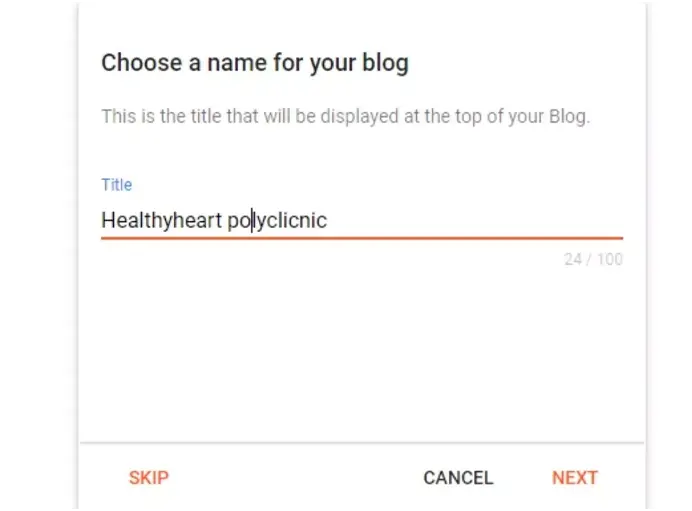
Step 2
Your static website is now created. However, you must modify the basic theme to make it look more professional.

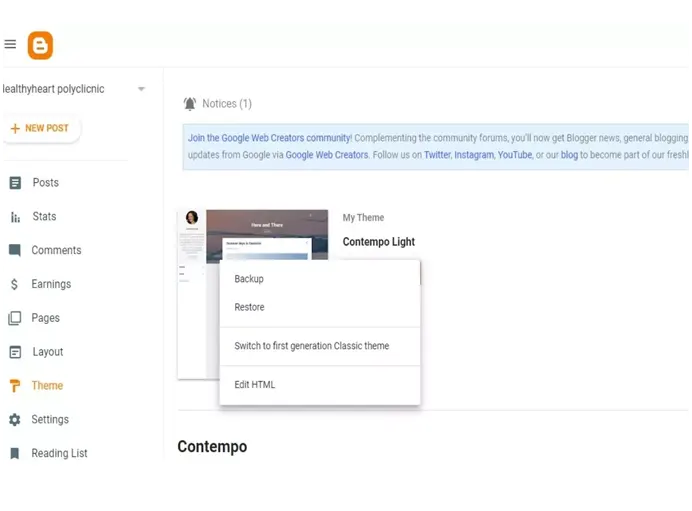
Step 3
Click the arrow next to the customize button to modify the theme of your website. The restore option is shown. To switch themes, click on it.
Step 4
Click this link to download the theme for free. Enter your email address to receive the download link. A Zip file will be sent to you via email. After extracting it, locate the.xml file.
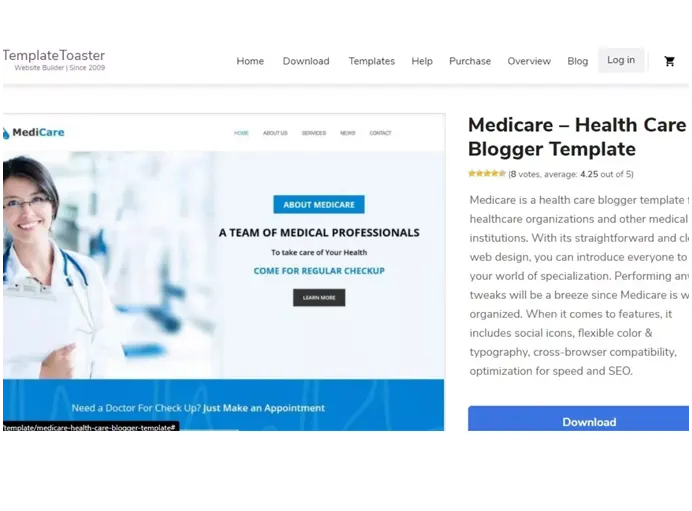
Step 5
To change your existing theme, submit the extracted.xml file and use the restore option to install a new theme.
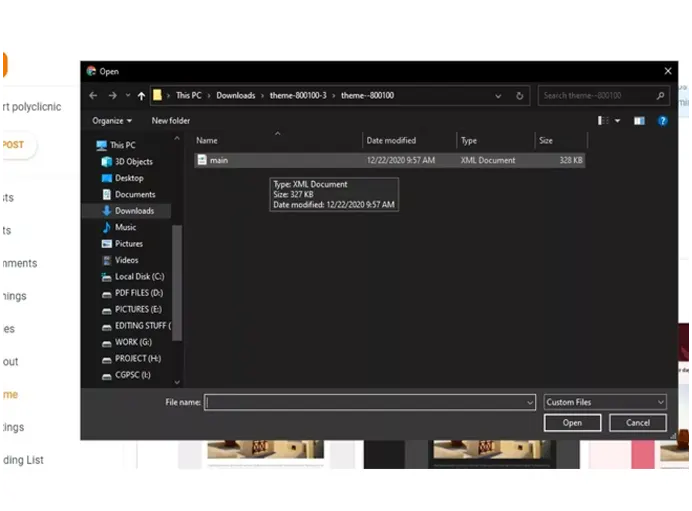
Step 6
Your website’s theme or template has now been modified. You may now add new features and alter your static website to suit your needs. Thus, you’ve made your very first static webpage.

ITVerticals Services

10 Best Private Search Engines for Secure Searching
Adam Romy
September 1, 2026

Top Influencer Marketing Platforms to Grow Your Brand
John Costa
August 25, 2026

10 Best AI App Builders to Build Apps Without Coding
Adam Romy
August 20, 2026

10 Affiliate Marketing Strategies to Grow Traffic, Sales, and Commissions
Adam Romy
August 18, 2026
Social Media Marketing Cost: Pricing and Packages
John Costa
September 3, 2026
10 Best Private Search Engines for Secure Searching
Adam Romy
September 1, 2026
Top Influencer Marketing Platforms to Grow Your Brand
John Costa
August 25, 2026
10 Best AI App Builders to Build Apps Without Coding
Adam Romy
August 20, 2026
10 Affiliate Marketing Strategies to Grow Traffic, Sales, and Commissions
Adam Romy
August 18, 2026
How Much Does an Ecommerce Website Cost in 2025?
Ecommerce marker is growing each year and 2026 is no different. It’s a great time to start your online store. But wait? One of the first questions that comes to your mind is, how much ecommerce website cost?
There is more to ecommerce website development than just a one-time investment. It affects how your business operates, how your customers experience your brand, and how much you can scale. The initial ecommerce website cost, as well as the ongoing expenses of running a store per month, are all layers to consider.
We’ll break down the ecommerce website cost in detail in this comprehensive guide, from design, functionality, platform choice, to hidden costs. During this blog, we’ll also discuss the long-term value you can expect from your investment, so that you can budget both for the short and long term.

Website Building and Design
You will incur an immediate and visible ecommerce website development cost when you start your online store and design your ecommerce site. Your design decides how customers get to your brand and how easy it is to find, browse, and buy your products. Some other online ecommerce builders such as Shopify, Wix, and Squarespace are also available where you can spend between $300 to $1,000.
They usually come with templates, ecommerce features, and hosting in one package. The cost of hiring professional designers and agencies can vary from $2,000 to $10,000. By following this method you can create a custom design specifically to your brand identity, user preferences, and niche market. A professionally designed website notably increases trust and conversions, if you are specifically targeting high-value customers.
Design is not only meant for website UI, it’s also the usability of the site. A website with an appealing visual but without an intuitive navigation panel can drive customers away from the website. A mobile optimized website with easy checkout options and clear CTAs is an essential part of a successful website and SEO. For example, if you have a clothing store and sell different types of clothes, then you might focus on large, high resolution product photos and smooth scrolling features. Now if we talk about an electronics store, the goal is more focused on comparison tools, search capability, and product specifications.
When you build an ecommerce platform from the start, you can save long-term costs, so you should treat this as an investment, not merely as a cosmetic expense.

Key Factors That Affect Ecommerce Website Cost
When it comes to ecommerce platform choices, keep in mind that some offer high-quality features, but lack in user interface and interaction. At the same time, others have a good website builder and an attractive UI, but are not able to cater to basic integration and processing. Like big stores (BigCommerce, Shopify, and Wix) include good quality built-in features. At the same time, technical expertise is required in managing WooCommerce-based stores.
Shopping cart, payments, and product listings can significantly change how much your cost would be. The development and integration of advanced features, including subscription billing, multi-vendor marketplaces, and complex product customization, should cost more.
You should choose your development partner wisely, too. Even though freelancers can give you lower rates for website prices, but they may not have the same range of services and long-term support that an agency can offer. Additionally, developers in North America and Western Europe tend to charge higher rates than those in Asia and Eastern Europe. A similar ecommerce website design cost in the U.S. might be $8,000, while one in India or Ukraine can lower your ecommerce website design cost to $4,000.
Also the timeline of your project affects the cost. Rush projects tend to be more expensive since developers need to prioritize yours over their own.
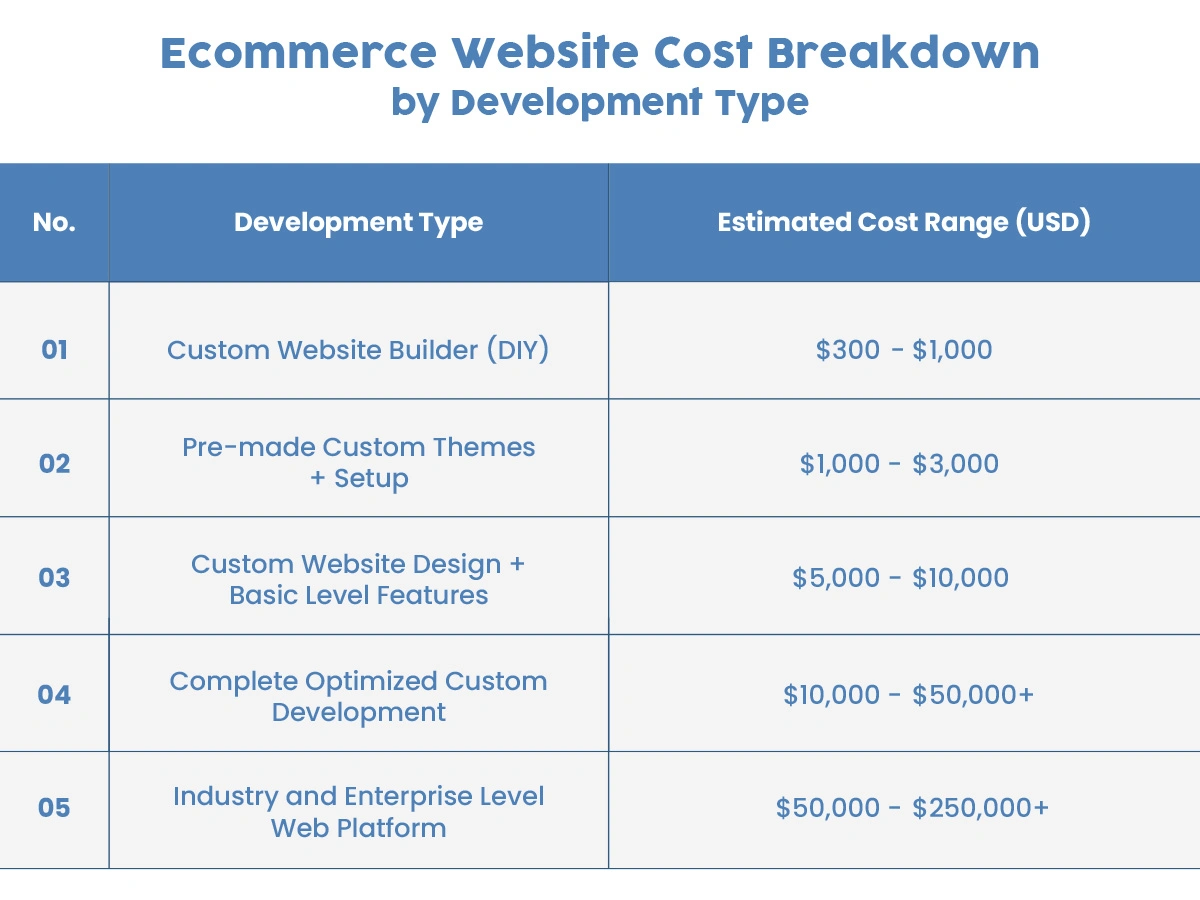
Ecommerce Website Cost Breakdown by Development Type
| Development Type | Estimated Cost Range (USD) |
|---|---|
| Custom Website Builder (DIY) | $300 – $1,000 |
| Pre-made Custom Themes + Setup | $1,000 – $3,000 |
| Custom Website Design + Basic Level Features | $5,000 – $10,000 |
| Complete Optimized Custom Development | $10,000 – $50,000+ |
| Industry and Enterprise Level Web Platform | $50,000 – $250,000+ |
If you just want to try out, a do it yourself website builder is ideal. Your business goals will align with development type. Pre-made themes with a basic setup can be catchy to business owners who want a polished look without breaking the bank.
The development and design of a brand‘s website becomes essential if it needs unique functionality, advanced integrations, and completely customized look. If you want it right now and because of rapid growth as well as the need for scalability from the start, completely custom development may also be the best option. Thousands of products, complex logistics, and large-scale digital marketing campaigns are often handled by enterprise-level platforms for multinational companies.
It may seem appealing to purchase a platform at a lower initial cost, but you could face costly migrations or redevelopments if it cannot handle future growth.
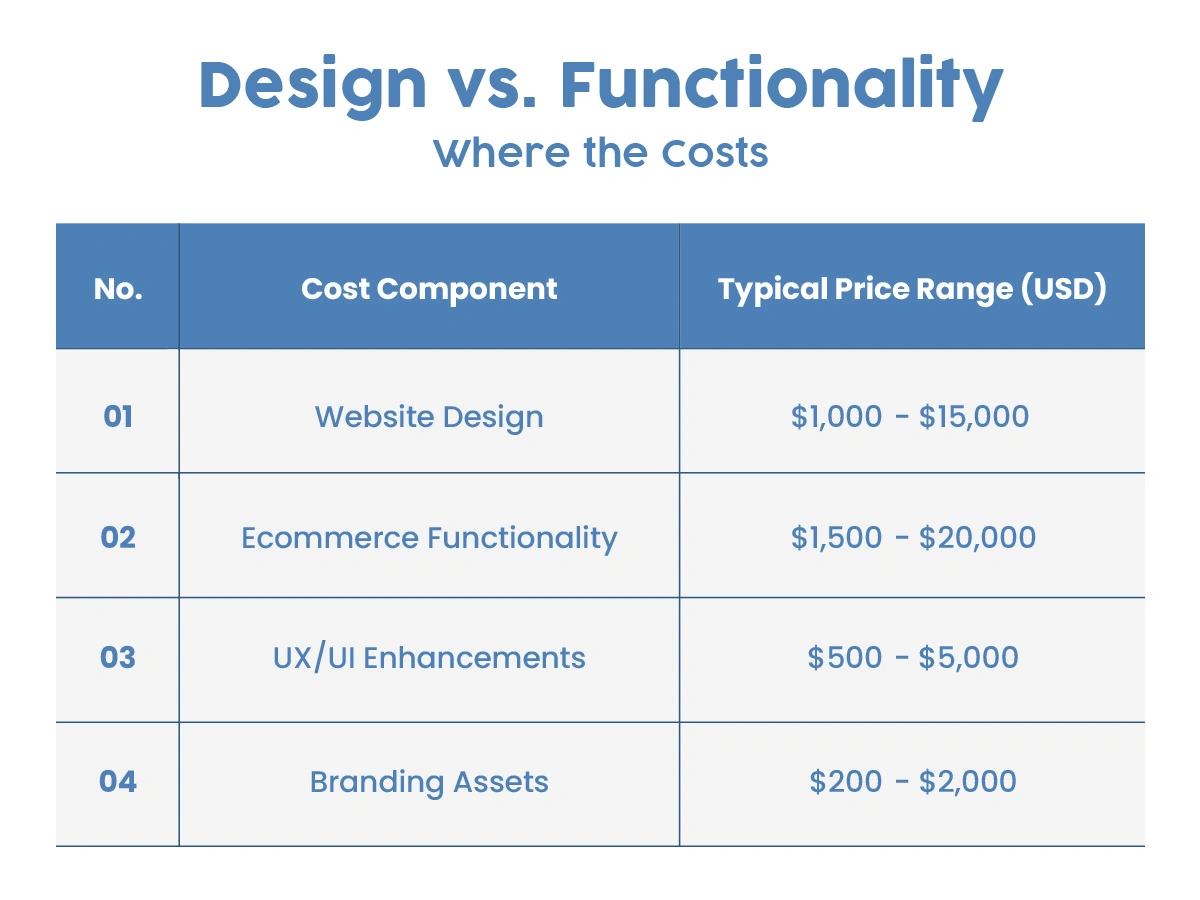
Design vs. Functionality: Where the Costs Go
| Cost Component | Typical Price Range (USD) |
|---|---|
| Website Design | $1,000 – $15,000 |
| Ecommerce Functionality | $1,500 – $20,000 |
| UX/UI Enhancements | $500 – $5,000 |
| Branding Assets | $200 – $2,000 |
Budgeting for your ecommerce website costs requires you to differentiate between ecommerce website design costs and functionality costs. Design costs include layout, typography, color schemes, product photo presentation, and branding. You pay for functionality costs when your store operates, including the shopping cart, product filtering, payment gateways, and inventory management.
Depending on your industry and audience, you will need to strike a balance between these two. As an example, luxury fashion retailers might emphasize design heavily to convey exclusivity and elegance. In contrast, tech stores emphasize functionality such as product comparisons, advanced search filters, and compatibility checks.
Most often than not, new business owners focus on/invest in one aspect and neglect the other. At the same time, a feature-equipped website with bad design may struggle to attract customers. On the contrary, a beautifully and attractive designed site with weak functionality may lose customers and result in abandoned carts.
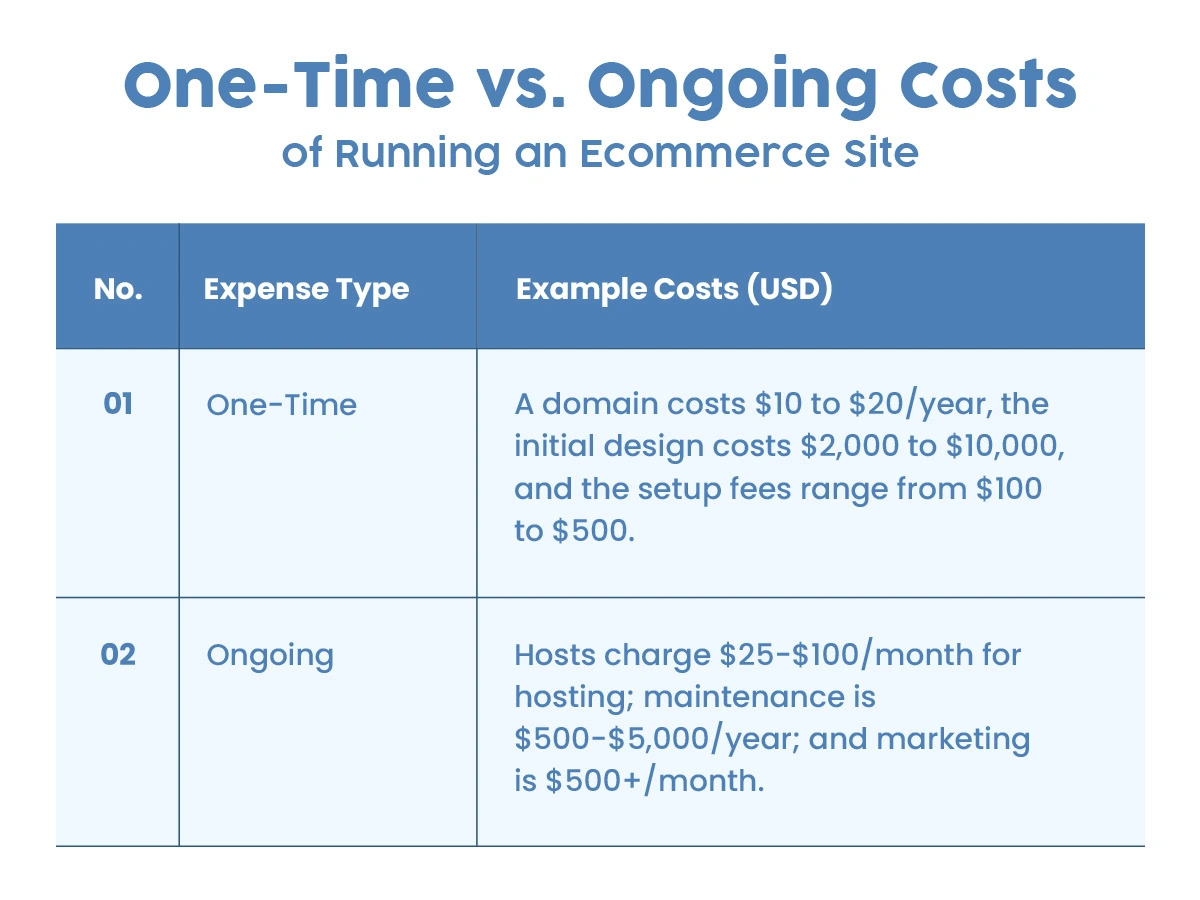
One-Time vs. Ongoing Costs of Running an Ecommerce Site
| Expense Type | Example Costs (USD) |
|---|---|
| One-Time | In this type of costing the domain costs around $10 to $20/year, basic design costs around $2,000 to $10,000 and the setup range to $100 to $500. |
| Ongoing | Hosting costs, you $25-$100 on monthly basis while maintenance costs around $500-$5,000/year. Marketing costs you $500+/month. |
Sustainable review of the budget makes sure the difference between running and onetime costs. In the launch phase of your ecommerce site, cost cover expenses such as ecommerce website development, platform setup and domain purchases
Payment of costs such as software licenses, security updates, web hosting and digital marketing campaigns will make your store up and running. WooCommerce requires separate hosting and plugin fees, as you add more products, features and digital marketing. On the other hand Shopify, for an example, charges a monthly subscription fee.
The biggest mistake new store owners make is failing to budget for ongoing maintenance costs. A beautifully designed website that is not maintained can quickly develop security issues and run into performance problems. The cost of running an online store per month can also increase.

Hidden Costs You Might Overlook
The launch of an ecommerce website comes with hidden costs that can catch business owners by surprise, even with a carefully planned budget. Some equally important costs quickly add up, even if you complete the hosting, design, and basic website development. These potential expenses allow you to save time and future unpleasant surprises.
Custom Plugin Development
Your chosen ecommerce platform may not contain all the features your business needs from the start, no matter how robust it is. There are a number ready made plugins and apps that can handle many common functions, but sometimes your needs are unique.
| Plugin Complexity | Cost Range (USD) | Estimated Development Hours | Key Features & Examples |
|---|---|---|---|
| Basic | $1,500 – $5,000 | 20 – 50 | A custom product field. A basic shipping rate calculator. A simple review and rating system. A basic event-based notification system. |
| Medium | $5,000 – $20,000 | 50 – 200 | A custom product field. A basic shipping rate calculator. A simple review and rating system. A basic event-based notification system. |
| High / Enterprise | $20,000+ | 200+ | Marketplace with multiple vendors. Full subscription management. Deep integration with ERP or CRM. Custom checkout process with advanced security. |
Create a product configurator that allows your customers to customize their products in a highly specific way, or a shipping calculator that takes into account variables most standard tools cannot. It is usually the only solution to these situations to hire a developer to build a custom plugin, which can cost as little as $500 for simple functionality and as much as $5,000 for more advanced tools.
Content Migration
During the process of switching from the older ecommerce platform to the newer one, you need to transfer your current content on the site such as customer related information, product listing and historical data, though it looks simple in the first place but it’s a lot of overhead if you have thousands of pages related to categories and detailed product descriptions. Such migration services generally cost your around $300 for small sites, upward of $2,000 for larger and complex projects. For top search rankings you need to make sure that all URLs, metadata and images migrate correctly in order to maintain it.
Mobile Optimization
Making sure your website delivers a seamless experience on mobile devices because in current era is no longer optional with mobile commerce representing a major portion of online sales. Potential customers will be driven away from a website that looks good on a desktop but is slow or looks bad on a smartphone.
As simple as adjusting certain page elements to fit smaller screens, costing around 500 dollars, to as complicated as a complete responsive redesign, would increase the ecommerce website cost to 3,000 dollars or more. Increasing conversion rates and improving customer satisfaction usually pay for this investment in today’s competitive ecommerce environment.
Testing & Quality Assurance (QA)
Make sure your ecommerce site works as intended across a variety of devices, browsers, and operating systems before it goes live. After done with checkout processes, payment gateways, navigation, and load times, quality assurance also identifies and fixes bugs, which, if left unresolved, can become problematic and sales lost. In large-scale projects with complex functionality, thorough testing can increase the ecommerce website costs as much as $5,000 or more. If you left this step, then it can cost you much more in the long run if problems come back after launch.
If you add these issues that are often overlooked like costs custom plugin development, content migration, mobile optimization, and thorough testing you’ll be better prepared to launch an ecommerce website that’s functional, user-friendly, and competitive right away.

Is the Cost Worth It? ROI and Long-Term Value
You become more focused on the long-term value of your ecommerce website when you see it as an investment rather than just a cost-heavy liability. An online store is more than your digital store, but it is a powerful online business. It boost online sales and builds customer trust, boosts brand credibility, loyalty, and creates a seamless shopping experience that keeps customers. After all, these pros will lead to higher conversion rates, a larger customer base, and higher ROI.
A professional design, intuitive navigation, and optimized functionality are often used by businesses to achieve optimal results. Depending on the volume of traffic, a 20 percent to 50 percent increase in conversion rate can result in thousands, and might even tens of thousands, of additional sales per month. It can generate a lot of revenue than the cost of setting up an online store in the next few years, making it not only worthwhile but very profitable.
Ecommerce sites that are aesthetically attractive and well-maintained can grow with your business without requiring frequent updates, in addition to scalability. In this way the platform will remain fast, secure, and compatible with changing technology, which will lower redesign costs, and cut maintenance headaches, By focusing on customer engagement, product development, and digital marketing, rather than constantly dealing with technical issues, you can drive business growth.
FAQ’s: Cost of a Static Website
A static website will be created in one to two days. On the other hand, coding and launching a website from scratch takes months.
Yes, static websites are generally easy to build. They are often the first choice for beginners or those with limited technical skills.
WordPress is without a doubt the greatest platform for building any kind of static website.
Final Verdict: Cost of a Static Website
Businesses must first account for the location of the development team and the complexity of the website when estimating the static website cost, as these factors have a significant impact on the total cost of development. Developing a static website for both iOS and Android at the same time is a wise move for companies since both platforms have strong adoption rates. Given that infrastructure accounts for the largest portion of static website cost, it makes sense for businesses to try and minimize expenditures on things like third-party API integration, data storage and scalability, and so on, if there are multiple possibilities.
ITVerticals Services
Social Media Marketing Cost: Pricing and Packages
John Costa
September 3, 2026
10 Best Private Search Engines for Secure Searching
Adam Romy
September 1, 2026
Top Influencer Marketing Platforms to Grow Your Brand
John Costa
August 25, 2026
10 Best AI App Builders to Build Apps Without Coding
Adam Romy
August 20, 2026
10 Affiliate Marketing Strategies to Grow Traffic, Sales, and Commissions
Adam Romy
August 18, 2026
Social Media Marketing Cost: Pricing and Packages
John Costa
September 3, 2026
10 Best Private Search Engines for Secure Searching
Adam Romy
September 1, 2026
Top Influencer Marketing Platforms to Grow Your Brand
John Costa
August 25, 2026
10 Best AI App Builders to Build Apps Without Coding
Adam Romy
August 20, 2026
10 Affiliate Marketing Strategies to Grow Traffic, Sales, and Commissions
Adam Romy
August 18, 2026
