
Successful Email Marketing Strategies That Drive Results In 2026
In 2026, nearly 392 billion emails will be sent every single day. And the number will continue to climb to 408.2 billion by the end of 2027. Though most emails do nothing. They land, they get skimmed for less than a second and go straight into the archives folder where the emails go to waste.
But for brands, email marketing is still one of the best marketing channels. According to OptinMonster, email marketing earns $36 for every dollar spent. But the brands focusing on volume are not the ones winning. The ones winning are those following a successful email marketing strategy and sticking with it.
This guide gives you 8 email marketing strategies that’ll get you results in 2026, and a B2B funnel roadmap you can use to send the right email at the right stage of the buyer’s journey.
Table of Contents

Is creating an email marketing strategy worth it in 2026?
Email marketing returns $36 for every $1 spent. So, the answer to the question is clearly yes. But that return only shows up behind an effective email marketing strategy. In fact, this marketing channel outperforms every other digital marketing services when your email marketing strategy is properly executed.
To clear the air even more, around 65% of marketing managers who were surveyed by AdRoll said they plan to invest more in their email marketing strategy in 2026. They treat it as a reliable owned channel when compared to rented spaces like social media platforms where there are algorithms that change overnight and the cost of reach keeps going up.
Skepticism typically is caused due to two things. First is the saturated inbox problem, where subscribers are getting loads of emails every day, and the open rates have gone down because of that. The second is the Apple Mail Privacy Protection update, which started preloading emails in 2021 and it has made open rate data a less reliable metric.
Both concerns are real. But that doesn’t mean the marketing channel is the problem. Rather that you need to change your email marketing strategy. Gmail and Yahoo bulk sending requirements, which got tighter through 2025 and 2026, raised the floor on what a legitimate sender looks like. They carry proper authentication, low spam complaint rates, and one-click unsubscribe option inside emails.
If you are struggling with email marketing, you need the right email marketing strategy. Email marketing strategy development doesn’t have to be complicated, and what follows is an email marketing strategy plan built from 8 strategies that are driving results in 2026.
8 email marketing strategies that drive results in 2026
These 8 strategies make up an email marketing strategy plan that’s sequenced on purpose. Treat the sequence as email marketing strategy development in order, not a pick-and-mix menu. The ones at the top, personalization and segmentation, decide who gets what message.
While the ones in the middle, mobile optimization and automation, handle how messages reach people. And then the ones at the end, testing, subject lines, behavioral triggers, and AI, are how you compound results over time.
Skipping to #6 before you’ve followed #2 is why so many email programs stagnate despite technically doing everything right.
1. Personalize your emails beyond 'Hi [First Name]'
Using a subscriber’s first name in an email greeting is table stakes. It has been one of the most followed practices since at least 2010, and at this point, readers don’t even notice it. Personalization in 2026 means using behavioral data to show content that shows what the subscriber has done, browsed, or bought.
Amazon is the clearest proof of concept: 35% of their total product sales are driven by their behavioral email personalization engine (Oppizi). Their emails don’t just say your name; they reflect your purchase history, your browsing patterns, and the products you lingered on without buying. It’s the clearest case for building an ecommerce email marketing strategy around behavior instead of batch-and-blast sends.
The user behavioral signals you should track are:
![1. Personalize your emails beyond 'Hi [First Name]'](https://cdn.itverticals.com/wp-content/personalize-your-emails-beyond-hi-first-name.webp)
- Pages that they visited on your site
- Products that they browsed
- Emails they have previously clicked
- Their purchase history
- Their buyer journey.
Each of these tells you something different about what that person needs next, and it’s how you separate email marketing strategies for new customers from the ones you send loyal buyers. Someone who browsed your pricing page three times this week needs a different email than someone who signed up for your newsletter six months ago and opened twice.
Only 21% of B2B marketers currently use personalization beyond basic name merge tags, which means if you focus more on behavioral personalization system, you’re already ahead of roughly 4 out of 5 competitors in your space.
You can start with it by using dynamic content blocks and an email marketing strategy template that maps copy to each segment. There are many modern ESPs like Klaviyo, Hubspot, and ActiveCampaign support conditional content shows different copy, images, or CTAs based on the subscriber tags or segments.

2. Segment your subscribers for better targeting
Marketers who segment their lists see 760% higher revenue per campaign compared to those sending one message to the whole list. Segmentation is the backbone of any effective email marketing strategy. That stat sounds extreme until you think about what segmentation actually does: it puts the right message in front of the person who is most likely to act on it, rather than sending a generic message to thousands of people who are at completely different stages of their relationship with your brand.
Most guides on segmentation stop at demographics and basic behavior, but there are 4 segment types that produce the most impact. The first is lifecycle stage: new subscribers, active buyers, at-risk (no opens in 60 days), and churned (no opens in 90-plus days).
Each stage needs a completely different kind of email, which is why email marketing strategies for new customers look nothing like the ones you send repeat buyers. The second is product category interest, where someone who clicked your email about healthcare automation gets tagged differently than someone who clicked your SaaS pricing content.
The third is engagement tier, where high openers and clickers get your best campaign content and low engagers get a re-engagement sequence before you write them off. The fourth is purchase frequency, where one-time buyers need to be nurtured differently than repeat customers who trust you already.
The easiest segmentation to start with is engagement-based segmentation. Create lists based on open activity over the past 90 days. High engaging prospects go into active campaigns. Low engaging prospects go into a 3-email re-engagement sequence with a clear unsubscribe option at the end.
This single move can improve your deliverability rates and leave you with more readable data to work with going forward.
3. Optimize emails for mobile devices
More than 60% of the emails are opened on mobile. That number hasn’t changed for years, but still many email templates are still built for desktop screens and that shrink awkwardly on a phone screen, small text that requires you to pinch and zoom, and a CTA button that is too small to tap without frustration.
Emails optimized for mobile generate 4x more revenue per click than desktop optimized ones. (Emailmonday).
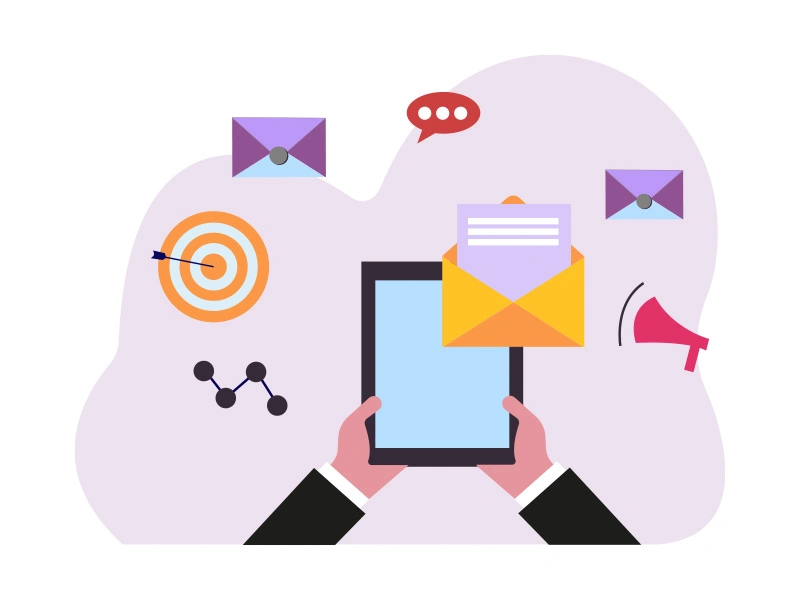
The revenue doesn’t come from making emails prettier, it comes by making the journey of the user from opening to clicking to contact you easier.
Mobile optimization means keeping a few specific things in check. First, make sure the emails use single-column layouts that don’t require horizontal scrolling. Secondly, keep the font size to 14px for body text and 22px for headlines, so the user can read without pinching and zooming. Finally keep the CTA button at least 44px tall and wide enough for a thumb to tap.
Preview text that’s treated as a second subject line, 40 to 130 characters that continue the hook from the subject line rather than repeating it or defaulting to ‘View in browser.’ And email copy that gets to the point fast because people scroll through emails on their phones between tasks, not at their desk with a coffee and unlimited attention.
Many marketing team skip testing their emails on dark mode before sending. That is a bad move. Because 80% of the users have dark mode enabled on their mobiles. And emails not created for those devices can end up showing black text over black background and mess image contrast entirely.
4. Automate high-intent customer interactions
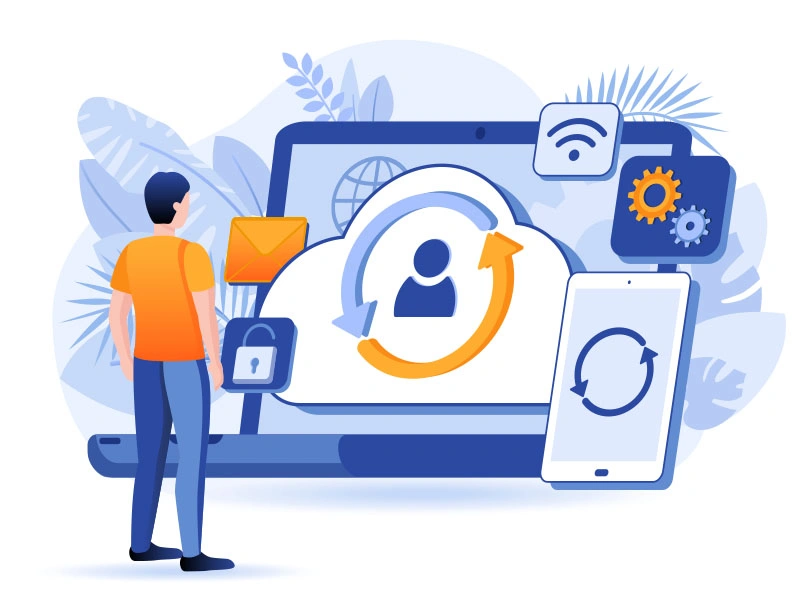
Triggered emails have a 86% higher engagement rate than standard broadcast campaigns (Campaign Monitor). The reason is pretty simple, they fire at the exact moment the subscriber signals they are ready to take the next step. This means they receive email when it is relevant for them not when it is convenient for you to send.
A well-built email marketing automation strategy generates 20% to 30% of the total email revenue for brands that build it properly.
The 5 automations worth building first, especially your email marketing strategies for new customers, are:
- A welcome sequence for new subscribers (3 emails covering brand story, problem validation, and a useful resource)
- An abandoned cart series for ecommerce (2 to 3 emails within 24 hours of cart abandonment)
- A post-purchase sequence (confirmation plus a follow-up that drives review or repeat purchase)
- A re-engagement series for subscribers who haven’t opened in 90 days (3 emails with a final opt-down option)
- A lifecycle trigger for behavioral signals like visiting your pricing page or clicking a product email without converting.
For an ecommerce email marketing strategy, the distinction that matters most when building automation is behavioral triggers versus time-based drips. A time-based drip fires on a schedule regardless of what the subscriber has done. A behavioral trigger fires when the subscriber does something that signals intent.
A behavioral-focused email marketing automation strategy works because the email is sent when it is relevant, not on an arbitrary Monday morning.
Trigger based sequences outperform time-based newsletters in conversion rate almost every time. And keep sequences short:
5. Test what matters and test it often
A/B testing is one of those practices that most email marketers claim they do. But in reality, only a few do it well. One common mistake in A/B testing comes when testing multiple variables at once. Making it hard to find which variant got results.
The second most common mistake is stopping a test before there is enough data, which can lead to false conclusions that can actively hurt performance as time passes.
Brands that are using email analytics tool like Litmus Email Analytics have seen a 43% higher ROI than those that don’t use one. And it’s not because of the tool, but rather than correctly measured statistics that land better decisions.
The priority order of variable matters as well.

- Subject lines
- Send time
- CTA copy
- Email length
- Personalization depth
- Content format
Once you get a solid ground on your subject lines, move to the next variable. Each test should focus only on one variable. And make sure you get at least 200 conversions per variant so you are confident. Log everything in an email marketing strategy template or spreadsheet with the hypothesis, result, and what you plan to test next.
The metric you track also has to match what you changed. If you tested a subject line, measure open rate. Or if you tested CTA copy, measure click-through rate. If you tested an offer, measure revenue per email sent. Open rates in 2026 are also less reliable as a primary metric thanks to Apple MPP pre-loading emails and inflating opens across Apple Mail users. The cleaner 2026 KPIs are click-through rate, conversion rate per email, and revenue per recipient. Those numbers tell you what’s actually happening, not just who opened.

6. Write subject lines that increase open rates
Subject lines are tested the most, and still most marketers get it wrong. The problem is not that they don’t try. The problem is they try to sound clever in their subject lines, instead of making sure they’re clear and specific. In 2026, the subject lines that consistently outperform are ones built on curiosity gaps combined with concrete details. ‘How we increased open rates by 31% in one send’ beats ‘The email marketing secret nobody shares’ because it’s specific, it implies a result, and the reader can picture what the email is about before opening it.
5 subject line structures outperform across industries.
The number-plus-benefit format works because numbers create specificity: ‘7 email mistakes killing your open rates’ tells the reader exactly what to expect.
The question format works when the question is genuinely interesting and not obviously rhetorical: ‘Are you sending emails on the wrong day?’ creates a curiosity gap the reader wants to close.
The confession format disarms skepticism: ‘I ignored segmentation for 2 years. Here’s what it cost me.’
The loss framing format triggers the same psychological pull as loss aversion: ‘You’re probably leaving 30% of email revenue on the table.’
And the specific how-to format sets an expectation of practical value: ‘How to write a subject line in under 60 seconds.’
Preview text is the part of your subject line strategy most teams ignore entirely. It’s the 40 to 130 characters that appear next to or below the subject line in most mobile inboxes, and most emails either leave it blank (which pulls whatever text is first in the email body, often an ‘unsubscribe’ link or browser prompt) or repeat the subject line word for word.
7. Send emails based on user behavior
Section 4 covered building the automation infrastructure. This section covers the signal layer: which behavioral events are worth tracking and what email each one should trigger. The infrastructure is the pipes.
The behavioral signals are what you decide to send through them and when. Getting this part right is what separates an email program that generates consistent revenue from one that sends nice campaigns to an audience that doesn’t convert. It’s the layer where an email marketing strategy plan turns into revenue.
The 6 behavioral signals worth building email triggers around are:

- Pricing page visits (trigger: case study or demo invite within 24 hours),
- Product page repeat visits without purchase (trigger: product-specific email with social proof or a limited offer)
- Email link clicks on a specific topic (trigger: tag the subscriber and serve deeper content on that topic)
- Cart abandonment (trigger: 3-email sequence starting within 1 hour)
- Subscription tier change or upgrade (trigger: onboarding sequence for the new tier)
- Support ticket opens (trigger: check-in email 48 hours after resolution to confirm satisfaction).
Each of these signals something specific about where the subscriber is and what they need next.
Responding to the signal is always more effective than sending on a schedule.
On metrics: open rates are no longer a reliable primary KPI in 2026. Apple Mail Privacy Protection pre-loads emails for Apple Mail users, which inflates open rate data and makes it useless as a conversion signal.
The metrics that actually reflect behavior are click-through rate (did they engage with the content?), conversion per email (did the behavior the email was designed to drive actually happen?), and revenue per recipient (what did this send actually generate?). Switching to these 3 metrics changes what you optimize for and usually changes what you test first.
8. Use AI-powered email marketing automation
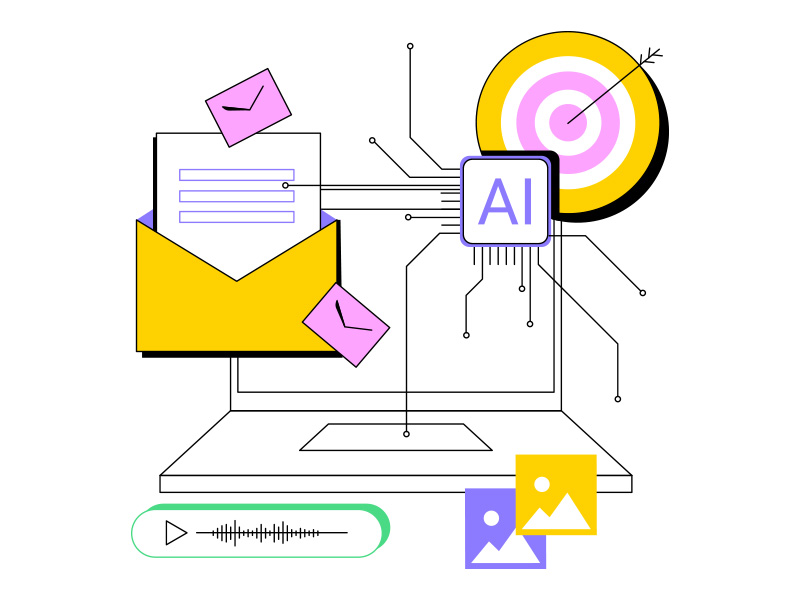
34% of email marketers already use AI for copywriting assistance, making it the most common AI-assisted task in the channel (Litmus State of Email 2026). And 97% of marketers used at least one interactive or AI-assisted element in their emails in 2025, which means AI in email is no longer experimental. It’s mainstream. The question in 2026 isn’t whether to use AI in your email marketing automation strategy. It’s knowing exactly what it’s good at and where it still needs a human in the loop.
AI handles 3 things well in email marketing. The first is copywriting assistance: first drafts, subject line variants, and personalized opening lines at scale. A tool like Claude API can generate personalized email openers for thousands of subscribers based on CRM data in the time it would take to write 20 manually.
The second is send-time optimization, where platforms analyze individual subscriber engagement history to determine the exact time each person is most likely to open, rather than sending at a fixed time to the whole list.
The third is predictive segmentation, where AI identifies behavioral patterns that predict future actions like churn risk, purchase likelihood, or content category interest, before those patterns become obvious to a human analyst.
The caveat that matters: AI copy that isn’t humanized reads like AI copy. Subscribers notice faster than most marketers expect.
The tell is usually rhythm, where every sentence is medium-length, every paragraph is 3 to 4 lines, and nothing sounds like a person actually typed it. If you use AI to generate email copy, treat the output as a first draft, not a final send. Read it aloud. Cut the words that sound formal. Add a specific detail or a real example.
Successful B2B email marketing strategies for every funnel stage
B2B email marketing strategies don’t work the same way B2C does. The average B2B deal involves 6 to 10 decision-makers (Gartner), the sales cycle runs weeks or months rather than hours, and the same subscriber will need completely different email content depending on where they are in their evaluation process.
Sending the same newsletter to a brand-new lead and a prospect who visited your pricing page three times this week is an email marketing strategy problem disguised as a content problem.
The fix is a B2B email marketing strategy plan that maps emails to the funnel stage, not the calendar.
TOFU: Awareness (welcome sequences, newsletters, education)
TOFU subscribers are early-stage. They know they have a problem. They don’t know if you’re the right solution, or if they’re even ready to evaluate solutions yet.
Only 4% of website visitors are ready to buy on their first visit (Content Whale), which means 96% of the people joining your list from a lead magnet or blog post need nurturing before they’ll convert. This is the heart of an inbound email marketing strategy: the content that works here proves you understand their problem before you ever mention your product.
When you design email marketing strategies for new customers, the email types that perform at TOFU are: a 3-email welcome sequence structured as brand story (why we exist), problem validation (the specific pain we solve and how it typically shows up), and a useful resource (a guide, checklist, or tool they can use immediately without buying anything).
Weekly or fortnightly newsletters with no direct sales CTA also perform well here because they build the habit of opening and reading. The goal of every TOFU email is to earn the next open, not to close anything. A subject line like ‘The 3-minute read that will change how you think about [their core problem]’ works because it makes a specific promise with low commitment from the reader.
The KPI for TOFU isn’t conversion. It’s engagement depth. That means click-through on embedded links, scroll activity in platforms that track it, and reply rate when you ask a question. Your email marketing strategies for new customers should escalate as engagement grows. Those signals tell you which subscribers are moving toward MOFU and should get more targeted content.

MOFU: Education (guides, nurture content, comparison emails)
MOFU is where most B2B email marketing strategies go thin. Research from Content Whale shows that 68% of B2B deals stall at the consideration phase. Not because the prospect lost interest, but because brands over-invest in TOFU traffic and BOFU conversion assets while leaving almost nothing in between.
The subscriber has read your welcome sequence, opened a few newsletters, and is now comparing options. This is exactly the moment most brands send them the same newsletter they’ve been sending since day one.
The email content that works at MOFU is content that helps the subscriber make a better decision, even if that decision isn’t immediately to buy from you. Case study sequences that show a real problem, the approach taken, and the specific result (with numbers, not vague claims) perform because they’re concrete. Comparison guides that honestly lay out how different approaches work (and where each has tradeoffs) build trust because they don’t feel like a sales pitch.
Product-adjacent education, content about the category the subscriber is evaluating rather than your product specifically, positions you as a reliable source before they’re ready to evaluate vendors. That credibility is what an inbound email marketing strategy is built to earn. A MOFU subject line like ‘How [company name] cut content production time by 60%: their 4-step email playbook’ works because it’s specific, it promises a process, and it leads with someone else’s result rather than a feature claim. The KPI at MOFU is click-through rate and email-to-landing-page conversion on gated content like guides, webinars, and comparison tools.
BOFU: Conversion (case studies, demos, limited offers)
BOFU subscribers have self-selected as serious buyers. They’ve visited your pricing page, clicked product-specific emails, downloaded a comparison guide, or attended a webinar.
They’re evaluating whether to buy from you specifically, and they’re probably comparing you against 2 or 3 other options. BOFU content that converts at 5 to 10x the rate of TOFU content (Marketful), but only if it’s built right. Most brands underinvest here: only 2 of every 15 companies allocate adequate resources to BOFU assets (Marketful).
The email types that close at BOFU are:

- Personalized demo invites (not a calendar widget blast, a 1:1 invite that references what the subscriber has looked at)
- Case studies that mirror the subscriber’s industry or use case as closely as possible.
Time-sensitive offers like early access or founding member pricing, and objection-handling sequences that address the specific fears that typically stop prospects from moving forward
.
Every BOFU email should have a single CTA. No newsletter content, no resource links, no distractions. One action, made as easy as possible to take.
A BOFU subject line like ‘Quick question before you decide, [First Name]’ works because it’s conversational. It signals that you know they’re in decision mode, and it creates a micro-curiosity gap without any pressure language. The KPI at BOFU is reply rate, demo booked, trial started, or purchase. Engagement metrics stop mattering here. Conversion is the only signal that counts.
FAQs: email marketing strategy
An inbound email marketing strategy and your wider inbound motion share the same goal. Earn trust before asking for a sale. Email captures leads from inbound content like guides, SEO posts, and webinars, then nurtures them through targeted sequences toward conversion. Done right, email is where inbound leads convert, not where they discover you. The two channels compound each other: better content brings better subscribers, and better email sequences turn subscribers into buyers.
The strongest email marketing campaign strategy pairs behavioral segmentation with automated triggers. Sending the right email when a subscriber signals readiness. Whether by visiting a pricing page, downloading a guide, or opening 3 emails in a row. This strategy outperforms any broadcast campaign, regardless of how good the creative is. Relevance at the right moment beats every other tactical improvement you can make to a generic send.
GDPR requires explicit consent before emailing EU subscribers, documented opt-in records, and a functional one-click unsubscribe in every email. In practice, GDPR improves your email marketing strategy: consent-based lists consistently outperform large scraped ones because engagement is higher and spam complaint rates are lower. Treat GDPR compliance as a list quality filter. Smaller, consenting lists deliver better results than large, unverified ones.
AI handles 3 things well right now. Copywriting assistance for first drafts and subject line variants, send-time optimization based on individual subscriber behavior, and predictive segmentation that identifies patterns before they become obvious. Humans still own the strategy: who to email, what to offer, and why that offer matters to that specific segment. The best email programs use AI to speed up execution, not to replace strategic judgment.
At minimum, an email service provider for sending and automation, and a CRM for segmentation data. Klaviyo, HubSpot, and ActiveCampaign are the most commonly used ESPs for teams serious about behavioral automation.
More advanced stacks add a deliverability monitor like MXToolbox or Postmark, a preview and testing tool like Litmus, and an AI copywriting layer for content generation at scale.
Start with the ESP and CRM. Add the rest as your volume and complexity grow. A reusable email marketing strategy template keeps campaigns consistent as that stack expands.
The issue was never whether email works. The channel still outperforms every other digital marketing option on ROI when executed as an effective email marketing strategy. The real problem is that most email programs are running tactics without an email marketing strategy connecting them. Personalization without segmentation is noise at scale.
Automation without behavioral triggers is just a more expensive drip. Subject line testing without defined KPIs is effort that produces no learning.
Email marketing strategy development compounds. When the 8 strategies in this article work in order. Personalization and segmentation setting the foundation. Behavioral automation carrying the execution. And testing and AI compounding results over time. You get better ROI with every run.
Looking for professional email marketing services to get more clients/customers to your business? Contact IT Verticals today to find how we can help you reach your goals.
Email marketing strategy that compounds
The issue was never whether email works. The channel still outperforms every other digital marketing option on ROI when executed as an effective email marketing strategy. The real problem is that most email programs are running tactics without an email marketing strategy connecting them. Personalization without segmentation is noise at scale.
Automation without behavioral triggers is just a more expensive drip. Subject line testing without defined KPIs is effort that produces no learning.
Email marketing strategy development compounds. When the 8 strategies in this article work in order. Personalization and segmentation setting the foundation. Behavioral automation carrying the execution. And testing and AI compounding results over time. You get better ROI with every run.
Looking for professional email marketing services to get more clients/customers to your business? Contact IT Verticals today to find how we can help you reach your goals.
ITVerticals Services

10 Best Private Search Engines for Secure Searching
Adam Romy
September 1, 2026

Top Influencer Marketing Platforms to Grow Your Brand
John Costa
August 25, 2026

10 Best AI App Builders to Build Apps Without Coding
Adam Romy
August 20, 2026
10 Affiliate Marketing Strategies to Grow Traffic, Sales, and Commissions
Adam Romy
August 18, 2026
Social Media Marketing Cost: Pricing and Packages
John Costa
September 3, 2026
10 Best Private Search Engines for Secure Searching
Adam Romy
September 1, 2026
Top Influencer Marketing Platforms to Grow Your Brand
John Costa
August 25, 2026
10 Best AI App Builders to Build Apps Without Coding
Adam Romy
August 20, 2026
10 Affiliate Marketing Strategies to Grow Traffic, Sales, and Commissions
Adam Romy
August 18, 2026
