
Website Design Cost: A Complete Guide to Website Pricing and Development
Every business wants to impress and attract its target audience, and a static website can make it happen!
A website is not only to fill the slot but is the first interaction customers have with the business. Understanding the website design cost will help you to invest in right features without overspending. Although the price varies widely our research highlighted that a typical starting price runs between $2,000 and $100,000. Whereas standard business websites are usually offered for a price range between $ 3,000 and $30,000. Understanding these pricing factors will provide you with assistance in planning your budget more effectively.
Whether you are comparing a freelancer with an agency or a WordPress site against a Shopify store, this guide covers it all. On the go, we’ll cover pricing by website type, platform, and embedded features. In addition, website maintenance costs will also be part of the discussion. So, by the end, you’ll have a clear understanding and framework, which will assist you in planning a realistic budget and in choosing the right website design partner for your business.
Table of Contents

Average Website Design Cost by Website Type
The average website design cost usually ranges anywhere between $500 and $50,000+. But this average website creation cost cannot be decided by any one factor. There are multiple attributes that impact the cost of website design. For a simple landing page average cost, it’s typically $500 to $3,000. Alternatively, if you are planning for a professional site built by an agency, then the usual cost for website design possibly will be $5000 to $20,000.
For larger firms or brands, this usual price differs extensively and can range between $25,000 and $50,000. Every business has its own requirements and expectations from the website, leading to different features and ultimately pricing also.

Key Factors That Influence Website Design Cost
Every website development project demands different prices, as the functionality of each project and level of customization is different. For instance, a single landing page can cost less when compared to the website for any firm. Below are some of the key factors that influence the cost of website design.
- Design Complexity: Basic website design requires minimal cost. While complex features including heavy graphics, visual assets and animations lead to higher cost.
- Functionality: Standard or simple website design is affordable and fast. However, booking tools, interactive configurators, and product builders increase development costs.
- Customization: Pre-made templates offer low cost solution, but custom-built solutions like client portals or checkouts increases the cost.
Low-Cost Website Design vs. Professional Custom Solutions
Low-Cost Website Design: Best for low-budget websites and small local businesses with the typical turnaround time up to 3 weeks. However, in this low-cost website design it is difficult to add custom tools.
Professional Custom Solutions: This is the ideal solution for revenue-critical websites and established brands. In this category the complete setup can take up to 6+ months. The product is completely scalable and built to adapt to future growth.
Final Verdict: According to our ITVerticals experts, you should choose low-cost website design if the requirement includes fast, low-budget, and immediate web presence. However, if the business demands tailored features, a unique competitive edge, and high scalability, then professional custom solutions are best.

Website Development Cost Breakdown: From Design to Launch
A full website development cost breakdown typically spans four phases:
- Planning and Discovery (10% – 15%): This phase in website development includes defining the site architecture, project scope, mapping and sitemap, content strategy, and user personas.
- Design and UX (20% – 25%): The design and UX phase involves the creation of wireframes or low-fidelity designs and visual mockups.
- Development and Coding (40% – 50%): The development phase includes writing front-end and backend code.
- Testing and Launch (10% – 15%): Catching functional bugs and optimizing performance issues before the project launch.
You need to itemize the estimate to prevent scope creep and allow budget flexibility.
Website Creation Cost Across Different Project Stages
Every phase in website development demands different prices. Development takes the largest share of the total website design budget, followed by visual design, content, strategy and testing. Below is the basic cost breakdown across different project stages:
- Discovery and Roadmap: $100 – $1,500 (Defining goals, scope and audience)
- UX and Visual Design: $500 – $5,000 (Crafting of website layout, look and feel)
- Front and Back-end Build: $500 – $10,000+ (Building code, integrations and features)
- Content and Copy: $100 – $2,000 (Writing text, adding media and stagging images)
- Quality Assurance: $50 – $1,000 (Bug identification and fixing, testing and QA)
Website Cost by Platform: WordPress, Shopify, WooCommerce, and Magento
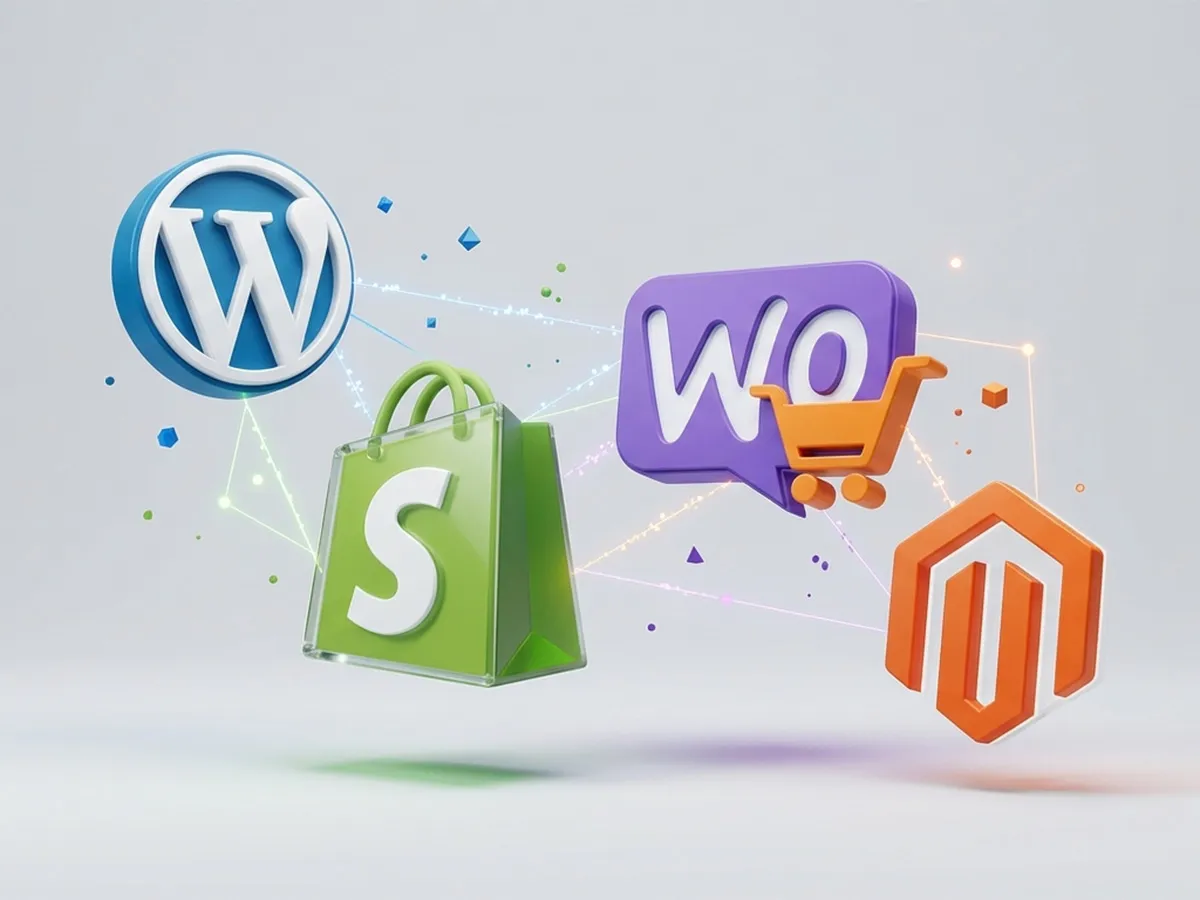
Now, we’ll discuss the website cost by platform, because the decision of platform selection also influences the website creation cost significantly.
WordPress Website Design Cost for Business Websites
WordPress website design cost typically runs between $1,500 and $20,000+. This pricing covers concept development on Figma, branding integration, mobile optimization and specialized layout.
Shopify Website Design Cost for Online Stores
Shopify website design costs for online stores start from $300 and can reach up to 30,000+. Within this price the your business can get various features including tailored home and product layouts, optimized storefronts, upsell features, cart and checkout journey, and integrated app functionality.
WooCommerce Website Development Cost for Flexible Online Stores
WooCommerce website development cost for flexible online stores can reach up to $30,000+. As WooCommerce runs on WordPress it offers complete ownership of creative and technical functionalities.
Magento Website Development Cost for Complex eCommerce Operations
Magento website development cost for complex ecommerce starts from $15,000 and reaches up to $30,000. The strength of the platform is the handling of large product catalogs, complex B2B pricing rules, and multi-storefront operations.

Ecommerce Website Development Cost and Online Store Features
Some of the essential eCommerce features that affect development pricing are:
- Complex product variations and configurations: Inclusion of product metrics, tiered volume, pricing schedule, interactive visual customizations.
- Specialized payment gateways and checkouts: Basic setup includes PayPal or Stripe, and premium setup includes localized alternative payment methods (APMs), multi-currency switching, and automated subscription billing cycles.
- Real-time shipping and global tax logistics: Standard setup includes flat-rate rules, while premium features include a live API connection, multi-warehouse routing rules, and backend complexity.
- Third-party software and ERP integration: Managing inventory comes as a basic feature, and premium online store feature in this includes CRM tools, syncing of the live storefront with an external Enterprise Resource Planning (ERP) platform, and fulfillment systems.
Custom eCommerce Functionality and Long-Term Scalability
Custom eCommerce functionalities are for businesses that are in the race for long-term scalability and have outgrown basic platform features. The custom eCommerce functionality includes:
- Configurators
- Loyalty programs
- Subscription billing
- Multi-vendor marketplace functionality
These above-mentioned custom features push the eCommerce website development cost significantly higher, with a range between $5,000 and $30,000.

Website Maintenance Cost and Annual Website Expenses
One of the most underestimated lines of expense is the website maintenance cost, followed by the annual website expenses. Due to the lack of planning, if you have only considered the initial cost of the project and started working, then it might lead to scope creep. This is because website development costs are not only the upfront cost; it needs continuous maintenance and renewals of plugins, integrations, APIs, and more. Businesses that focus more on planning the website’s yearly cost as part of their initial cost estimation process tend to have more predictable financial years.
Recurring Website Expenses to Include in the Budget
Keeping the website online requires continuous investment of capital. Some of the recurring website expenses that must be included in the budget are:
- Core infrastructure:
- Domain name registration
- Website hosting
- SSL Certificate
- Core infrastructure:
- Software and Functionality:
- CMS or eCommerce Platform Fees
- Premium Plugins, Themes, and Extensions
- Maintenance and Protection:
- Security and daily backups
- Technical maintenance retainers

Website Design Pricing Models and Choosing the Right Approach
Usually, agencies and freelancers both use three types of website design pricing models, namely fixed-price website projects. Hourly and monthly website design services, and value-based pricing models. Let’s discuss each of the models so you can choose the right option.
Fixed-Price Website Projects
The most secure pricing model is the fixed-price model. It is a common practice for agencies to provide a simple quote for a defined list of deliverables. Cost of a website design remains fixed, forcing both the agency and the client to agree on the strict scope before starting the work. This model of website design cost also prevents “bill shock”, which is the sudden change in the invoice after project completion.
Hourly and Monthly Website Design Services
Hourly and monthly website design services suit projects with changing requirements on-going needs. This pricing model is more flexible than a fixed pricing model but often requires close budget monitoring. This is because the cost of a website design is determined by the hours invested, not the predetermined total.
Value-Based Pricing
Value-based pricing is the third type of pricing model which freelancers and software development services agencies offer. In this model, the pricing is determined by the direct value of the project or the ROI generated by the project.
Choosing the Right Approach: You should go for a fixed pricing model if you have a tight budget but a clear requirement list. Choose an hourly billing model if the project needs are frequently changing. Lastly, opt for the value-based pricing model if your project demands elite-level strategy or for high-stakes enterprise projects.
The most secure pricing model is the fixed-price model. It is a common practice for agencies to provide a simple quote for a defined list of deliverables. This cost of website design remains fixed, forcing both the agency and the client to agree on the strict scope before starting the work. This model of website design cost also prevents “bill shock”, which is the sudden change in the invoice after project completion.

Planning a Website Budget and Total Cost of Ownership
One of the biggest mistakes you could make during the planning of a website budget is looking only for the upfront cost. Projects with such an approach are often caught off guard by recurring costs over two to three years. The best approach is to plan holistically, not only the website design pricing but also the website maintenance cost.
Estimating the Total Cost of a Website Before Development
Starting with developing a clear project scope, it is inevitable to calculate the estimate of the expenses earlier. Gathering the upfront cost from website design service agencies based on the specific price helps you to prevent unexpected scope creep. Mentioning the design complexity, integration requirements, and choice of professional talent should be added to the pre-development cost baseline.
Comparing Upfront Website Cost with Long-Term Ownership Expenses
The upfront cost of website design for a small business or at enterprise level covers the cost of visible builds, UI/UX, initial front-end coding, and platform integration setups. In contrast, long-term website maintenance costs determine the total cost of ownership. To solve this, the best strategy is to ask for the rough three-year website total cost of ownership, not just the initial or launch quote.
Website Design Cost Related FAQs
The average cost of website design for a small business is between $3,000 and $8,000.
The website design cost typically includes planning, wireframing, mockups, development, content integrations, SEO setup, testing, and launch support.
The website maintenance cost generally starts at up to $300 per month for a small business and reaches up to several hundred to a thousand dollars for a larger ecommerce website.
WordPress generally provides more flexibility and customization, while Shopify offers easier management for businesses prioritizing convenience.
Ecommerce website development cost differs from a corporate website as it includes the features of a shopping cart, inventory management, and payment gateways.
Conclusion
Understanding website design cost is beneficial if the estimation is done before the project starts. Cost estimation done after the project has started will result negatively and may result in posing threat to successful website project completion. Platform selection, features needed, annual maintenance cost, and total cost of ownership make up the full price of the website design. Whether you are a small business or an enterprise, estimating the cost of the project initially is the best approach.
ITVerticals Services

Best Affiliate Marketing Platforms to Grow Your Business
John Costa
September 8, 2026

Social Media Marketing Cost: Pricing and Packages
John Costa
September 3, 2026

10 Best Private Search Engines for Secure Searching
Adam Romy
September 1, 2026

Top Influencer Marketing Platforms to Grow Your Brand
John Costa
August 25, 2026
Website Design Cost: A Complete Guide to Website Pricing and Development
Adam Romy
September 10, 2026
Best Affiliate Marketing Platforms to Grow Your Business
John Costa
September 8, 2026
Social Media Marketing Cost: Pricing and Packages
John Costa
September 3, 2026
10 Best Private Search Engines for Secure Searching
Adam Romy
September 1, 2026
Top Influencer Marketing Platforms to Grow Your Brand
John Costa
August 25, 2026
